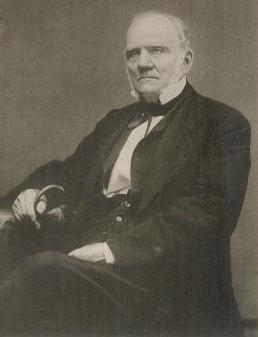
Orville Robinson (October 28, 1801 – December 1, 1882) was an American lawyer and Democratic politician from New York who served one term in the United States House of Representatives from 1843 to 1845. He was born in Richfield, New York, on October 28, 1801. Little is recorded about his early family life, but he came of age in central New York during a period of rapid growth and political change in the early nineteenth century, circumstances that helped shape his later legal and political career.
Robinson studied law in New York and was admitted to the bar in 1827. Soon after his admission, he established himself as a practicing attorney in Mexico, a town in Oswego County, New York. His legal training and growing reputation in the community quickly led him into local public service. In 1828 he was appointed Justice of the Peace, and in 1829 he served as Town Clerk of Mexico, positions that placed him at the center of local governance and judicial administration.
Robinson’s early public career expanded at the county level when he became surrogate of Oswego County, a post he held from 1830 to 1838. As surrogate, he was responsible for probate matters and the administration of estates, work that reinforced his standing as a capable lawyer and public official. He entered state politics as a member of the New York State Assembly, serving terms in 1834, 1836, and 1837. During these years he aligned with the Democratic Party, which was then dominant in New York politics, and he participated in legislative deliberations on issues affecting a rapidly developing state.
By the early 1840s, Robinson had become a prominent legal and political figure in Oswego County. He served as district attorney of Oswego County from 1841 to 1843, prosecuting criminal cases on behalf of the state, and in 1843 he was Town Supervisor of Mexico, further consolidating his influence in local affairs. That same year, he was elected as a Democrat to the Twenty-eighth United States Congress, representing New York in the U.S. House of Representatives. His congressional term ran from March 4, 1843, to March 3, 1845. As a member of the Democratic Party representing New York, Robinson contributed to the legislative process during this single term in office, participating in the democratic process and representing the interests of his constituents during a significant period in American history marked by debates over territorial expansion, economic policy, and sectional tensions.
After leaving Congress, Robinson returned to New York and continued his legal and political career. In 1847 he moved from Mexico to the growing port city of Oswego, New York, where he resumed the practice of law and became increasingly involved in municipal affairs. In 1853 he served as city recorder of Oswego, an office that combined judicial and administrative responsibilities in the city’s government. His experience and stature in state politics led to his return to the New York State Assembly in 1856, this time representing Oswego County’s 1st District. During this term he was elected Speaker of the Assembly, one of the highest leadership positions in the state legislature, reflecting the confidence his colleagues placed in his judgment and parliamentary skill.
In the late 1850s, Robinson received a federal appointment that drew on both his legal background and his familiarity with Oswego’s commercial importance on Lake Ontario. From 1858 to 1860 he served as collector of customs for the District of Oswego, overseeing the collection of federal customs duties at the port, a critical function in an era when tariffs were a primary source of national revenue. This position capped a long career that moved steadily from local offices to state leadership and federal service, illustrating the trajectory of a nineteenth-century Democratic politician rooted in upstate New York.
Orville Robinson died in Oswego, New York, on December 1, 1882. He was buried in Riverside Cemetery in Oswego. His life spanned more than eight decades of profound change in the United States, and his career reflected sustained engagement in the legal profession and in public service at the town, county, state, and national levels.
Congressional Record