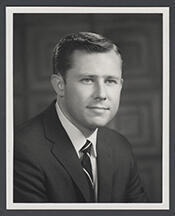
Orrin Holt (March 13, 1792 – June 20, 1855) was a United States Representative from Connecticut who was active in state and national politics during the Jacksonian era. He was born in Willington, Tolland County, Connecticut, where he spent much of his life. Raised in a rural community, he received only a limited formal schooling, a common circumstance in early nineteenth-century New England outside the major towns. Despite this, he developed sufficient standing in his community to enter public life, grounding his career in the agricultural pursuits that formed the economic backbone of the region.
Holt’s education was largely informal and practical, shaped by the demands of farm life and local civic affairs rather than by advanced academic training. From an early age he engaged in agriculture in and around Willington, acquiring land and working as a farmer. His experience as an agriculturist informed his later public service, as many of his contemporaries in Connecticut politics similarly emerged from the agrarian population and represented rural interests in state government.
Holt’s political career began at the state level. He was elected a member of the Connecticut House of Representatives, serving from 1830 to 1832. During these years he participated in the legislative life of a state undergoing political realignment in the wake of the rise of Jacksonian democracy. After his service in the lower house, he advanced to the Connecticut Senate, where he served in 1835 and 1836. His tenure in both chambers reflected growing local confidence in his leadership and placed him among the Democratic and Jacksonian-leaning figures who were reshaping Connecticut’s political landscape in the 1830s.
Holt entered national politics in the mid-1830s. He was elected as a Jacksonian to the Twenty-fourth Congress to fill the vacancy caused by the resignation of Representative Andrew T. Judson, another prominent Connecticut Democrat. Taking his seat on December 5, 1836, he joined the House of Representatives at a time marked by intense debates over banking policy, internal improvements, and the scope of federal power. He was subsequently reelected as a Democrat to the Twenty-fifth Congress, reflecting the transition from the Jacksonian label to the more formal Democratic Party designation. Holt served continuously in the U.S. House from December 5, 1836, to March 3, 1839, representing Connecticut at the close of Andrew Jackson’s administration and during the early part of Martin Van Buren’s presidency.
After leaving Congress at the conclusion of his second term, Holt returned to his earlier occupation and resumed agricultural pursuits in his native region. He remained a figure of local importance and extended his public service into the military sphere. He took an active interest in the military organizations of the State of Connecticut, participating in the state militia system that formed the backbone of local defense and civic order in the antebellum period. Over time he rose through the ranks and held official positions up to the level of inspector general, a senior post that involved oversight of militia organization, training, and readiness.
Holt spent his later years in East Willington, Connecticut, maintaining his ties to the community in which he had been born and had long resided. He died there on June 20, 1855. He was interred in the Old Cemetery at Willington Hill, Connecticut, a burial ground that contains the graves of many early residents of the town. His life and career, rooted in agriculture, state service, and a brief but notable tenure in the U.S. House of Representatives, reflected the experiences of many nineteenth-century New England politicians who combined local economic pursuits with periods of public office.
Congressional Record