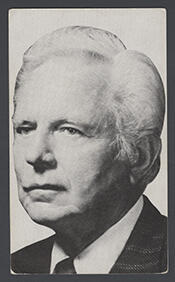
Norton Strange Townshend (December 25, 1815 – July 13, 1895) was a 19th-century American physician, educator, and politician who served one term as a United States representative from Ohio from 1851 to 1853. A member of the Democratic Party, he participated in the legislative process during a significant period in American history, representing the interests of his Ohio constituents in the years immediately preceding the Civil War. His career combined medical practice, public service, and agricultural education, and he became known for his integrity and independence in public life.
Townshend was born on December 25, 1815, in Northamptonshire, England. In his youth, he emigrated with his family to the United States, settling in Ohio, where he spent most of his life. Growing up in the developing communities of the Western Reserve, he was exposed to the reform movements and civic-minded culture that characterized the region in the early to mid-19th century. These experiences helped shape his later commitments to education, public health, and political engagement.
After receiving his early education in Ohio, Townshend pursued the study of medicine, a profession that was rapidly professionalizing during his lifetime. He undertook medical training and established himself as a practicing physician, serving the needs of a largely rural population. His medical work brought him into close contact with the everyday concerns of his neighbors and patients, reinforcing his interest in public welfare and reform. Through his practice, he gained a reputation for diligence and concern for community health, which in turn enhanced his standing in local civic affairs.
Townshend’s growing prominence as a physician and citizen led him into political life as a Democrat in a period marked by intense national debates over expansion, slavery, and economic development. Elected as a Democratic representative from Ohio to the Thirty-second Congress, he served in the U.S. House of Representatives from March 4, 1851, to March 3, 1853. During his single term in Congress, he contributed to the legislative process at a time when the nation was grappling with the consequences of the Compromise of 1850 and the sectional tensions that would soon erupt into civil war. As a member of the Democratic Party representing Ohio, Norton Strange Townshend participated in the democratic process and worked to represent the interests of his constituents, bringing to his congressional service the perspective of a physician and reform-minded citizen.
After leaving Congress, Townshend returned to Ohio and resumed his medical and civic pursuits. In the decades that followed, he became increasingly involved in agricultural and educational work, reflecting the broader 19th-century movement to improve scientific farming and public instruction. He was associated with efforts to develop agricultural education in Ohio, contributing to the growth of institutions and programs that promoted modern farming techniques and rural improvement. His public reputation for “honest independence,” later reflected in an online exhibit titled “Honest Independence: The Life of Norton Strange Townshend,” underscored the esteem in which he was held by contemporaries who valued his integrity and public spirit.
In his later years, Townshend continued to be active in professional and community affairs, maintaining his interest in medicine, education, and public policy even as younger generations assumed political leadership. He lived to see the transformation of the United States through civil war, Reconstruction, and rapid industrialization, remaining identified with the reformist and educational currents that had shaped his earlier career. Norton Strange Townshend died on July 13, 1895, in Ohio. He was buried in the state where he had built his medical practice, served in Congress, and devoted much of his life to public service, and his grave is preserved as a site of historical interest.
Congressional Record