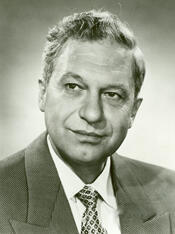
Norman S. Eddy (December 10, 1810 – January 28, 1872) was an American politician, lawyer, physician, and military officer who held state and federal offices in Indiana and the Territory of Minnesota. He served as a member of the Indiana State Senate from 1850 to 1853, represented Indiana in the U.S. House of Representatives from 1853 to 1855, was U.S. Attorney for the Territory of Minnesota from 1855 to 1861, and later served as Secretary of State of Indiana from 1870 until his death in 1872.
Eddy was born on December 10, 1810, in Scipio, Cayuga County, New York. He attended the common schools and pursued further studies at Cazenovia Seminary in Cazenovia, New York. Aspiring to a military education, he sought admission to the United States Military Academy at West Point but was unsuccessful. He then turned to the study of law in the office of William H. Seward, who would later become governor of New York and U.S. Secretary of State. Eddy ultimately chose a medical career, enrolling at the University of Pennsylvania School of Medicine in Philadelphia, where he studied under Dr. Samuel Jackson and chemist Robert Hare. He earned his M.D. degree in 1835.
In 1835, following his graduation in medicine, Eddy moved west to Mishawaka, Indiana, where he established a medical practice. He practiced medicine there for more than a decade, and for a time was associated professionally with Dr. Louis Humphreys. In 1847 he decided to shift his principal focus from medicine to law and relocated to South Bend, Indiana. He was admitted to the bar on April 1, 1847, and began the practice of law, forming a partnership with Joseph Jernegan. Although he had an active legal and medical presence in the community, he also showed an early interest in military affairs, attempting to organize a cavalry unit for service in the Mexican–American War; the federal government, however, did not accept the unit for service.
Eddy’s political career commenced in earnest at mid-century. A Democrat, he was elected to the Indiana State Senate, serving from 1850 to 1853. During these years he also held several local offices, building a reputation within his party and among his constituents in northern Indiana. In 1853, upon the retirement of Representative Graham N. Fitch, Eddy was elected as a Democrat to the Thirty-third Congress, representing Indiana in the U.S. House of Representatives from March 4, 1853, to March 3, 1855. His single term in Congress coincided with a period of intensifying sectional tensions in the United States. He participated in the legislative process and represented the interests of his Indiana constituents, but his bid for reelection was unsuccessful; he was defeated by Schuyler Colfax, who would later become Speaker of the House and Vice President of the United States.
After leaving Congress, Eddy continued his public service at the federal level. In 1855 President Franklin Pierce appointed him U.S. Attorney (often referred to as Attorney General) for the Territory of Minnesota, a post he held from 1855 to 1861. During this period he was also appointed commissioner for the sale of the Delaware trust lands in 1857, overseeing aspects of federal Indian land policy and disposition. President James Buchanan offered him the diplomatic post of Minister to the Netherlands, at The Hague, but Eddy declined the appointment. He remained in the Midwest, continuing his legal and political work as the nation moved toward civil war.
With the outbreak of the American Civil War, Eddy returned to military affairs and took an active role in the Union war effort. He organized the 48th Indiana Infantry and received a commission as its colonel. Under his command, the regiment saw significant combat in the Western Theater. Eddy led his men in the Battle of Iuka and the Battle of Corinth in Mississippi, participated in the operations at Grand Gulf, and took part in the siege of Vicksburg. At Iuka he was severely wounded in action; his regiment, bivouacked directly in front of an enemy artillery position, suffered heavy casualties, with 119 of his approximately 420 men killed or wounded in the engagement. The disabling nature of his wounds forced his departure from active service, and he left the army in July 1863 after about two years of field command.
Following his military service, Eddy returned to civilian life and resumed the practice of law in Indiana. He also reentered public administration in the postwar period. From 1865 to 1870 he served as Indiana’s collector of internal revenue, administering federal tax laws during the Reconstruction era. In 1870 he was elected Secretary of State of Indiana, a statewide executive office he held from 1870 until his death in 1872. In this capacity he oversaw state records, elections, and various administrative functions at a time when Indiana was adjusting to the political and economic changes following the Civil War.
Around 1835, Eddy married Anna M. Melchior, and the couple had six children. An adherent of the Episcopal Church, he was active in the religious life of his community in addition to his professional and public roles. Norman S. Eddy died of a heart condition at his home in Indianapolis, Indiana, on January 28, 1872, while still serving as Secretary of State. He was buried in South Bend City Cemetery in South Bend, Indiana, reflecting his long association with that community and with northern Indiana public life.
Congressional Record