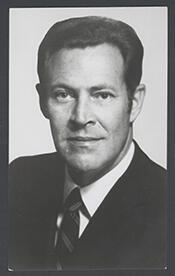
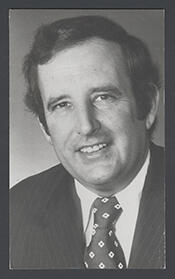
Nathaniel Terry Jr. (January 30, 1768 – June 14, 1844) was an American politician, lawyer, judge, and civic leader who served a single term in the United States House of Representatives, representing the at-large congressional district of Connecticut from 1817 to 1819 as a member of the Federalist Party. He previously served in the Connecticut House of Representatives from 1804 to 1815 and later as the fourth mayor of Hartford, Connecticut, from 1824 to 1831. His public career spanned law, state and national politics, municipal leadership, military service, and financial and insurance enterprises during a formative period in the early republic.
Terry was born in Enfield, Connecticut, on January 30, 1768, to Nathaniel Terry Sr. and Abiah (née Dwight) Terry. He attended the common schools of his native town and pursued higher education at Dartmouth College before completing his collegiate studies at Yale College, from which he graduated in 1786. Following his graduation, he read law in preparation for a legal career, reflecting the customary path of professional training for attorneys in the late eighteenth century.
After completing his legal studies, Terry was admitted to the bar in 1790 and commenced the practice of law in Enfield. In 1796 he moved to Hartford, Connecticut, which became the principal setting for his professional and political life. In Hartford he quickly emerged as a prominent figure in both civic and military affairs. He served as commander of the Governor’s Foot Guard from 1802 to 1813, and he also held judicial office as a judge of the Hartford County Court from 1807 until his resignation in 1809. His legal and judicial experience, combined with his militia service, helped establish his reputation as a leading citizen of the community.
Terry entered elective office as a member of the Connecticut House of Representatives, serving in that body from 1804 to 1815. During this period he was aligned with the Federalist Party, which was then dominant in much of New England. In addition to his legislative duties, he played a role in shaping the state’s fundamental law as a member of the Connecticut state constitutional convention in 1818, which produced the constitution that replaced the colonial charter and redefined the structure of state government. His legislative and constitutional work placed him at the center of Connecticut’s political transition in the early nineteenth century.
At the national level, Terry served a single term in the United States House of Representatives as a Federalist, representing Connecticut’s at-large congressional district in the Fifteenth Congress. His tenure in Congress began on March 4, 1817, and concluded on March 3, 1819. Serving during a significant period in American history, in the years immediately following the War of 1812 and at the outset of the so‑called “Era of Good Feelings,” he participated in the legislative process and represented the interests of his Connecticut constituents in debates over national policy, finance, and the evolving role of the federal government.
In addition to his legal and political activities, Terry was deeply involved in the commercial and financial life of Hartford. He served as president of the Hartford Fire Insurance Company from 1810 to 1835, a long tenure that coincided with the growth of Hartford as a major insurance center. He also served as president of the Hartford Bank from 1819 to 1828, further cementing his role in the city’s financial leadership. Alongside these responsibilities, he continued his military involvement, attaining the rank of general in the Connecticut State Militia, which underscored his standing in state affairs.
Terry’s municipal service culminated in his election as the fourth mayor of Hartford. He held the mayoralty from November 22, 1824, to March 28, 1831. During his tenure as mayor he was associated with the Whig Party, reflecting the realignment of political affiliations in the post-Federalist era. As mayor, he oversaw the administration of Hartford at a time of gradual urban growth and institutional development, drawing on his extensive experience in law, finance, and public service.
On March 14, 1798, Terry married Catharine Wadsworth in Hartford, Connecticut. The couple had eight children together, and their family connections linked Terry to prominent social and political networks in the region. In his later years he remained a respected figure in Connecticut public life, associated with the legal, financial, and civic institutions he had helped to shape. Nathaniel Terry Jr. died at the age of 76 in New Haven, Connecticut, on June 14, 1844. He was buried in Old North (Spring Grove) Cemetery in Hartford, Connecticut, where his grave marks the resting place of a lawyer, legislator, judge, congressman, mayor, militia officer, and business leader of early nineteenth-century Connecticut.
Congressional Record