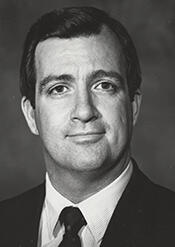
Nathaniel Pope (January 5, 1784 – January 23, 1850) was an American lawyer, territorial official, legislator, and long-serving federal judge who played a central role in the early political and legal development of Illinois. He served as Secretary of the Illinois Territory, as a Delegate to the United States House of Representatives from the Illinois Territory, and for more than thirty years as the United States District Judge for the United States District Court for the District of Illinois. As a member of the Democratic-Republican Party representing Illinois Territory, he contributed to the legislative process during two terms in Congress, participating in the democratic process and representing the interests of his frontier constituents during a formative period in American history.
Pope was born on January 5, 1784, in Louisville, in what was then the District of Kentucky, Virginia (which became the Commonwealth of Kentucky in 1792). He was the son of Colonel William H. Pope (1740–1825) and Penelope Sanford Edwards Pope (1757–), both of whom were born in Westmoreland County, Virginia. The Pope family was long established in Virginia, tracing its ancestry in the colony back to about 1650, when an earlier Nathaniel Pope moved from Maryland into the Northern Neck of Virginia, followed by Humphrey Pope and James Pope, probably his brothers. His grandfather Worden Pope (1705–1748) and great-grandfather Nathaniel Pope III (1660–1719), sometimes called “Bridges,” were also Virginians, and his grandmother Hester Netherton Pope was born in what was then Stafford County, Virginia. The family supported the Patriot cause during the American Revolutionary War under the leadership of their neighbor George Washington, whose distant ancestor John Washington had married the daughter of one of the earliest Nathaniel Popes. As the family moved steadily westward—from Prince William and Fauquier Counties in Virginia to the Kentucky frontier—Pope grew up in a milieu of land speculation, law, and politics that would shape his own career.
Pope was the youngest son in a large and politically active family. His eldest brother, John Pope (1770–1845), born in Prince William County, Virginia, became a prominent lawyer and politician, serving in both houses of the Kentucky legislature, in the United States Congress, and later as governor of the Arkansas Territory. Another brother, William H. Pope Jr. (1775–1844), was born as the family moved into Fauquier County, Virginia, while Alexander Pope (1781–1826) and Nathaniel himself were born after the family settled in Louisville. Several sisters survived to adulthood and married, including Penelope Edwards Oldham (1769–1821), Jane Pope Field (1772–1852), and Hester Pope Edwards (1788–1868), further extending the family’s social and political connections. After receiving a private education appropriate to his social standing, Nathaniel Pope attended Transylvania University in Lexington, Kentucky, one of the leading institutions of higher learning in the trans-Appalachian West. He then read law and completed his legal training in 1804.
Admitted to the bar in 1804, Pope began his legal career in private practice in Ste. Genevieve, in the Louisiana Territory (now part of Missouri), a French-influenced river town on the west bank of the Mississippi. Seeking broader opportunities, he soon crossed the river to Kaskaskia in the Indiana Territory, then a principal settlement in the American Bottom region. When Congress created the Illinois Territory on March 1, 1809, separating it from Indiana, Pope was already an established practitioner there. President James Madison initially appointed Kentucky politician John Boyle as Territorial Governor and Pope as Territorial Secretary, but Boyle resigned after three weeks to become Chief Justice of Kentucky. Boyle was succeeded by Ninian Edwards, a Maryland-born lawyer and politician who had moved to Kentucky and then to the Illinois Territory and who was related to Pope’s mother through the Edwards family. Pope served as Secretary of the Illinois Territory from 1809 to 1816 and acted as Governor for a period in 1809. During the War of 1812 he also held a commission as an officer in the Illinois Territorial Militia. In these roles he helped organize the territorial government, supervised official records, and participated in the codification of territorial laws, including work later reflected in the volume “Laws of the Territory of Illinois, revised and digested, under the authority of the legislature,” printed at Kaskaskia in 1815.
Pope’s prominence in territorial affairs led naturally to a congressional role. On September 5, 1816, he was elected as the non-voting Delegate from the Illinois Territory to the United States House of Representatives. A member of the Democratic-Republican Party, he served in the Fourteenth and Fifteenth Congresses from December 2, 1816, to November 30, 1818. In Congress, Pope was instrumental in securing the admission of Illinois as the twenty-first state of the Union on December 3, 1818. He played a decisive role in drafting and steering the statehood resolution, which passed despite the territory’s population falling short of the traditional 60,000-person threshold through what contemporaries regarded as creative counting. Pope also successfully proposed a significant alteration of the proposed northern boundary of Illinois. Instead of ending at the southern tip of Lake Michigan, he secured a boundary at the 42° 30’ north parallel, adding a broad strip of land that would later encompass thirteen northern counties, including the site of Chicago. This adjustment proved crucial to Illinois’s economic and political development by ensuring access to the Great Lakes and future canal routes, though it delayed Wisconsin’s path to statehood. In addition, Pope drafted the statehood resolution so that 2 percent of federal land-sale revenues in Illinois would be devoted to roads and 3 percent to schools, in contrast to earlier enabling acts that allocated the full 5 percent to roads, thereby providing an enduring financial foundation for public education in the new state.
When Illinois achieved statehood, Pope’s territorial mandate as Delegate ended. From November 30, 1818, to March 3, 1819, he served as register of the United States General Land Office at Edwardsville in the Illinois Territory (and, after December 3, 1818, in the State of Illinois), overseeing the disposition of federal lands at a time of rapid settlement and speculation. On March 3, 1819, President James Monroe nominated Pope to a newly created judgeship on the United States District Court for the District of Illinois, authorized by 3 Stat. 502. The Senate confirmed him the same day, and he received his commission immediately. His appointment placed him at the center of the federal judicial system in a large and sparsely settled state, where he presided over a wide range of civil and criminal matters arising under federal law, including land disputes, commercial litigation, and issues connected with the evolving relationship between federal authority and state institutions. In 1824 he sought further advancement as a candidate for the United States Senate from Illinois but was unsuccessful, and he continued to serve on the district court.
Pope remained on the federal bench for more than three decades, his tenure extending through the formative years of Illinois’s transformation from frontier territory to a populous and economically diverse state. His long service placed him among the more enduring figures in the early federal judiciary. Over the course of his career he became a respected legal authority in the region, and his decisions and administrative oversight helped stabilize federal law and procedure in the state. His influence was recognized in Illinois through the naming of Pope County in his honor, and in later years by institutions such as the Nathaniel Pope Elementary School in the North Lawndale neighborhood of Chicago, Illinois, which commemorated his contributions before its closure.
Nathaniel Pope’s judicial service ended with his death on January 23, 1850, in St. Louis, Missouri. He was originally interred in the Colonel O’Fallon Burying Ground in St. Louis and was later reinterred in Bellefontaine Cemetery in the same city. His life and career have been the subject of historical study, including Paul M. Angle’s privately printed 1937 memoir “Nathaniel Pope from 1784 to 1850” and subsequent scholarly articles examining his role in territorial politics and the achievement of Illinois statehood.
Congressional Record