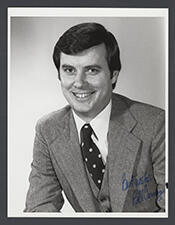
Nathaniel Jones is a name shared by several notable individuals, including an American boxer, a Welsh poet and minister, a United States Representative from New York, an American federal judge on the U.S. Court of Appeals for the Sixth Circuit, and an American soccer player. Each of these figures achieved distinction in very different fields over a span of more than two centuries.
Nathaniel Jones, the U.S. Representative from New York, was born on February 17, 1788, in Tyringham, Berkshire County, Massachusetts. He moved with his family to New York, where he pursued education and eventually studied law. Admitted to the bar, he commenced practice in Warwick, Orange County, New York. His early life and professional development took place against the backdrop of the early American republic, and he became involved in local affairs and legal practice before entering national politics.
Jones was elected as a Democrat to the Twenty-fifth and Twenty-sixth Congresses, serving as a U.S. Representative from New York from March 4, 1837, to March 3, 1841. During his tenure in Congress, he participated in legislative debates in a period marked by economic turmoil following the Panic of 1837 and by ongoing disputes over banking and federal economic policy. After leaving Congress, he continued in public service; he served as a judge of the Court of Common Pleas of Orange County, New York, and later held administrative and legal roles within the state. He eventually moved to Newburgh, New York, where he resumed the practice of law. Nathaniel Jones died on July 20, 1866, in Newburgh, Orange County, New York, and was interred in Cedar Hill Cemetery, leaving a record of service in both the legislative and judicial spheres of nineteenth-century New York.
Nathaniel Jones, the Welsh poet and minister, was born in 1832 in Wales and became known both for his religious vocation and his literary work in the Welsh language. Often associated with the rich Nonconformist and cultural traditions of nineteenth-century Wales, he served as a minister while also writing poetry that reflected the religious, social, and national currents of his time. His ministry placed him within the life of local congregations, where preaching and pastoral work were central, while his poetry contributed to the broader Welsh literary revival and the eisteddfod tradition that celebrated verse and oratory. He continued this dual career as poet and minister until his death in 1905, by which time he was recognized as part of the generation that helped sustain Welsh cultural and religious identity in the Victorian and Edwardian eras.
Nathaniel R. Jones, an American judge on the U.S. Court of Appeals for the Sixth Circuit, was born on May 12, 1926, in Youngstown, Ohio. He served in the United States Army Air Forces during World War II and, after the war, pursued legal studies, earning a law degree and entering private practice. Early in his career he became deeply involved in civil rights work, serving as assistant U.S. attorney for the Northern District of Ohio and later as general counsel of the National Association for the Advancement of Colored People (NAACP). In that capacity he played a key role in school desegregation and voting rights litigation across the United States during the height of the civil rights movement.
In 1979, President Jimmy Carter appointed Nathaniel R. Jones to the U.S. Court of Appeals for the Sixth Circuit, where he served as a federal appellate judge for decades. On the bench he participated in decisions involving civil rights, criminal justice, and constitutional law, and he became widely respected for his jurisprudence and his commitment to equality under the law. He assumed senior status in 1995 but continued to hear cases and remained active in legal and civic affairs. Beyond the courtroom, he taught, lectured, and wrote on civil rights and constitutional issues, mentoring younger lawyers and judges. Nathaniel R. Jones died on January 26, 2020, in Cincinnati, Ohio, leaving a legacy as both a prominent civil rights lawyer and a distinguished federal judge on the U.S. Sixth Circuit Court of Appeals.
Nate Jones, the American boxer, was born in 1972 and rose to prominence in the 1990s as a heavyweight competitor. Growing up in Chicago, Illinois, he developed his boxing skills in local gyms and amateur competitions, eventually earning a place on the United States national boxing team. His amateur career culminated in his participation in the 1996 Summer Olympics in Atlanta, Georgia, where he won a bronze medal in the heavyweight division, marking one of the high points of his competitive career. After turning professional, he fought as a heavyweight, bringing the experience and technique honed in international competition to the professional ranks. Following his retirement from active competition, he remained involved in the sport as a trainer and cornerman, working with other fighters and contributing to American boxing through coaching and mentorship.
Nate Jones, the American soccer player, was born in 2001 and represents a younger generation of athletes carrying the name into the twenty-first century. Coming of age at a time when soccer’s popularity and professional infrastructure were expanding in the United States, he developed through youth and academy systems that connected American players more directly to both domestic professional leagues and international opportunities. As a professional soccer player, he has pursued a career in a sport that has seen rapid growth in fan support, media coverage, and competitive standards in the U.S., reflecting the broader evolution of American soccer in the early 2000s and 2010s.
Taken together, these individuals named Nathaniel or Nate Jones—an early nineteenth-century U.S. Representative from New York, a nineteenth-century Welsh poet and minister, a twentieth-century American federal judge on the U.S. Sixth Circuit Court of Appeals, a late-twentieth-century American boxer, and a twenty-first-century American soccer player—illustrate the wide range of public, cultural, athletic, and judicial roles in which the name has appeared over time.
Congressional Record