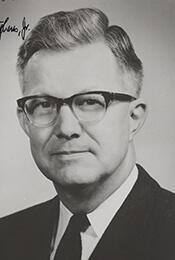
Nathaniel Job Hammond (December 26, 1833 – April 20, 1899) was a jurist and Democratic politician from the state of Georgia who served as Attorney General of Georgia from 1872 to 1877 and as a member of the United States House of Representatives from 1879 to 1887. He was born in Elbert County, Georgia, on December 26, 1833, to Amos Worrill Hammond and Eliza Caroline (Hudson) Hammond. Raised in the antebellum South, he came of age in a period of growing sectional tension that would shape his later legal and political career.
Hammond pursued higher education at the University of Georgia in Athens, where he graduated in 1852 with a Bachelor of Arts degree at the age of nineteen. The following year, in 1853, he was admitted to the state bar and commenced the practice of law in Atlanta, Georgia, entering into partnership with his father. His early legal work in Atlanta helped establish his reputation as a capable attorney in a rapidly growing urban center. In 1858, he married Laura Lewis, beginning a family life that ran parallel to his expanding professional and public responsibilities.
Hammond’s public career began in earnest on the eve of the Civil War. In 1861 he was elected solicitor general of the Atlanta circuit, a prosecutorial office in which he served throughout the war years until 1865. In the immediate postwar period, he emerged as an important legal figure in Georgia’s reconstruction of its judicial and constitutional framework. In 1867 he became reporter of the Supreme Court of Georgia, responsible for compiling and publishing the court’s decisions, a position he held until 1872. His work as reporter coincided with his growing influence in state constitutional matters; he was a member and noted leader of the Georgia constitutional convention of 1865, convened under presidential Reconstruction, and again played a leading role in the Georgia constitutional convention of 1877, which produced a new state constitution that governed Georgia for decades.
Hammond’s prominence in legal and constitutional affairs led to his appointment and subsequent service as Attorney General of Georgia from 1872 to 1877. In that capacity he was the state’s chief legal officer during a critical phase of Reconstruction and its aftermath, advising state officials and representing Georgia’s interests in significant legal disputes. Parallel to his official duties, he developed a long and influential association with the University of Georgia. Beginning in 1871, he served as a trustee of the university and remained on its board until his death in 1899, acting as chairman during his last years of service. He wrote extensively on the institution’s legal and constitutional position, authoring works such as “The University of Georgia and the Constitution” and “The University of Georgia: A Short History of Its Endowment and Legal Status.” He also served as president of the board of trustees of the Atlanta College of Physicians and Surgeons, reflecting his broader interest in educational and professional institutions in the state.
Hammond entered national politics in the late 1870s. In 1878 he was elected as a Democrat to the United States House of Representatives from Georgia and took his seat in the Forty-sixth Congress in 1879. He was re-elected three times, winning subsequent elections in 1880, 1882, and 1884, and served continuously through the Forty-ninth Congress, leaving office in 1887. Over the course of his four terms in Congress, he participated in the legislative process during a significant period in American history marked by the end of Reconstruction, the rise of the New South, and ongoing debates over federal power, civil rights, and economic development. As a Democratic representative, he was engaged in representing the interests of his Georgia constituents while contributing to national deliberations on law, governance, and public policy.
In 1886, Hammond was defeated for re-election by John D. Stewart, bringing his congressional service to a close at the end of his fourth term in 1887. After leaving Congress, he resumed the practice of law in Atlanta, returning to the profession that had first established his public standing. He continued his work as a university trustee and remained an influential figure in Georgia’s legal and educational circles until the end of his life.
Hammond died in Atlanta, Georgia, on April 20, 1899. He was buried in Oakland Cemetery in Atlanta, a resting place for many of the city’s leading political and civic figures. His career spanned the antebellum, Civil War, Reconstruction, and post-Reconstruction eras, and encompassed service as a local prosecutor, state supreme court reporter, attorney general, university trustee and author, and four-term member of the United States House of Representatives representing Georgia as a Democrat.
Congressional Record