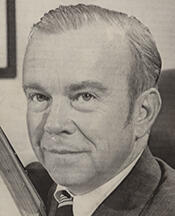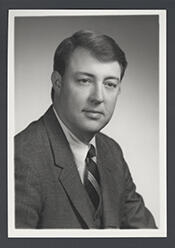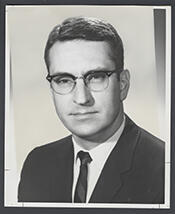
Nathaniel Neiman Craley Jr. (November 17, 1927 – June 18, 2006) was a Democratic member of the U.S. House of Representatives from Pennsylvania whose career combined local business leadership, county-level public service, national legislative work, and extensive administrative service in the Pacific Island territories of the United States. He was born in Red Lion, York County, Pennsylvania, where he was raised before leaving the state for preparatory school. He attended the Taft School in Watertown, Connecticut, graduating in 1946, and then returned to Pennsylvania to pursue higher education. He enrolled at Gettysburg College in Gettysburg, Pennsylvania, from which he graduated in 1950, laying the academic foundation for his later work in economics, public affairs, and governance.
Following his graduation from Gettysburg College, Craley entered the private sector in his home region. From 1950 to 1965 he was engaged in furniture manufacturing, a business that tied him closely to the economic life of York County during a period of postwar growth and industrial change. While building his business career, he also began to participate actively in civic and educational affairs. From 1958 to 1959 he served as an instructor in economics and history at York Junior College, sharing his knowledge of economic principles and historical developments with local students. His growing interest in public policy and community planning led him to accept a series of positions in county organizations that addressed social services, human relations, and land-use planning.
Craley’s early public service was rooted in York County institutions. From 1959 to 1965 he served as treasurer of the York County Planning Commission, where he was involved in the financial oversight of planning initiatives during a period of suburban expansion and infrastructure development. Simultaneously, he held leadership roles in community and human relations organizations. He was director and first vice president of the York County Council of Community Services from 1960 to 1964, helping coordinate social service efforts across the county, and he served as director of the York County Council for Human Relations from 1960 to 1963, reflecting an engagement with issues of civil rights and community cohesion in the early 1960s. His increasing prominence in local affairs naturally extended into partisan politics, and from 1962 to 1964 he served as chairman of the York County Democratic Committee, positioning him as a key figure in organizing and directing Democratic Party activities in the region.
Building on this local and county-level experience, Craley sought national office in the mid-1960s. Running as a Democrat, he was elected in 1964 to the 89th United States Congress, representing a Pennsylvania district during a period marked by the Great Society legislative agenda and significant federal action on civil rights, social welfare, and economic policy. He took office on January 3, 1965, and served one term in the House of Representatives. During his tenure, he participated in the legislative work of the House at a time when Congress was considering major domestic programs and grappling with evolving U.S. commitments abroad. In 1966 he stood for reelection but was an unsuccessful candidate, concluding his congressional service on January 3, 1967.
After leaving Congress, Craley embarked on a distinctive second phase of public service focused on the Pacific Island territories administered or associated with the United States. Beginning in 1967, he joined the administration of the Trust Territory of the Pacific Islands, a United Nations trusteeship administered by the United States that encompassed several island groups in Micronesia. From 1967 to 1972 he served as Commissioner for Public Affairs for the Trust Territory of the Pacific Islands, a role that involved public information, governmental relations, and communication between territorial authorities, local communities, and U.S. officials. From 1972 to 1976 he continued his work in the Trust Territory government as Special Assistant to the High Commissioner, advising the chief U.S. administrative officer on policy and administrative matters during a period when the islands were moving toward new political arrangements.
Craley played a notable role in the political development of the Northern Mariana Islands. In 1975 he served as Executive Director of the Plebiscite Commission of the Northern Mariana Islands, overseeing the administrative and organizational aspects of the plebiscite through which the people of the Northern Marianas voted on their future political status. Following this, from 1976 to 1978 he was Special Assistant to the Resident Commissioner of the Commonwealth of the Northern Mariana Islands, working within the emerging governmental framework of the new commonwealth as it developed its relationship with the United States. He then returned to broader Trust Territory responsibilities, serving from 1978 to 1981 as Director for Administration for the Trust Territory of the Pacific Islands, where he was responsible for overseeing administrative functions during a time of transition as various districts moved toward self-government or new political compacts. From 1981 to 1985 he again served as Special Assistant to the High Commissioner, continuing his involvement in the final stages of the Trust Territory’s evolution.
In his later years, Craley returned to Pennsylvania, maintaining ties to the region where his public and professional life had begun. He died in Glen Rock, Pennsylvania, on June 18, 2006, at the age of 78, of undisclosed causes. His career reflected a trajectory from local business and county service in York County to national legislative office and, ultimately, to a long period of administrative and advisory work in the Pacific Islands, where he contributed to the governance and political development of U.S.-administered territories and commonwealths.
Congressional Record