United States Representative Directory

Nathaniel Alexander

Nathaniel Alexander served as a representative for North Carolina (1803-1805).

  • Republican
  • North Carolina
  • District 10
  • Former
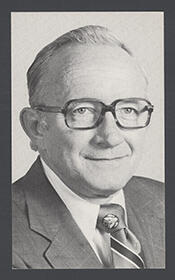
Portrait of Nathaniel Alexander North Carolina
Role Representative

Current assignment referenced in the congressional directory.

State North Carolina

Representing constituents across the North Carolina delegation.

District District 10

District insights and legislative focus areas.

Service period 1803-1805

Years of public service formally recorded.

Font size

Biography

Nathaniel Alexander is a name shared by several notable public figures and innovators active from the eighteenth through the twentieth centuries, including Nathaniel Alexander (1756–1808), governor of the U.S. state of North Carolina from 1805 to 1807; Nathaniel Alexander (1760–1840), an Anglican bishop in Ireland; Nathaniel Alexander (1815–1853), an Irish politician and Member of Parliament; and Nathaniel Alexander, an inventor known for designing a folding chair equipped with a book rest. Although these men were not related in any direct public record and lived in different places and periods, each achieved distinction in his respective field of government, ecclesiastical leadership, politics, or practical invention.

Nathaniel Alexander, the governor of North Carolina, was born in 1756, in what was then a British colony in North America. Coming of age during the era of the American Revolution, he belonged to the generation that would guide the early political development of the United States and its constituent states. While details of his early family life and formal education are less fully documented than those of some contemporaries, he emerged from the Revolutionary period as a figure of sufficient standing to enter public service in North Carolina. His formative years coincided with the transition from colonial governance to independent statehood, a context that shaped his later work in state government.

By the early nineteenth century, Nathaniel Alexander had become a leading public official in North Carolina. He served as governor of the state from 1805 to 1807, a period in which North Carolina was consolidating its institutions under the federal Constitution and navigating the early national politics of the Jeffersonian era. As governor, he presided over state affairs at a time when questions of internal improvements, the organization of state government, and the relationship between state and federal authority were central to public debate. His administration formed part of the broader evolution of North Carolina from a largely rural, agrarian society toward a more structured state government within the expanding United States. Nathaniel Alexander, the governor, died in 1808, closing a career identified with the formative years of North Carolina’s statehood.

Nathaniel Alexander, the Anglican bishop in Ireland, was born in 1760 and pursued a path of ecclesiastical service within the Church of Ireland, the Anglican-established church in that country. His early life and education took place within the Anglo-Irish milieu that supplied many of the clergy and bishops of the period, and he advanced through the clerical ranks as Ireland experienced significant political and religious change, including the era leading up to and following the Act of Union of 1801. His rise within the church reflected both his theological training and his integration into the established ecclesiastical structures of the time.

Over the course of his career, Bishop Nathaniel Alexander held senior positions in the Irish Anglican hierarchy, ultimately serving as an Anglican bishop in Ireland. In this capacity, he bore responsibility for the spiritual oversight of clergy and laity within his diocese, the administration of church property and institutions, and participation in the broader governance of the Church of Ireland. His episcopal tenure spanned decades marked by debates over church establishment, relations between Protestants and Catholics, and the social and political transformations of the late eighteenth and early nineteenth centuries. He remained an active figure in the Irish ecclesiastical establishment until his death in 1840, by which time he had witnessed and helped guide the church through a period of substantial change.

Another bearer of the name, Nathaniel Alexander (1815–1853), was an Irish politician who served as a Member of Parliament during the mid-nineteenth century. Born in 1815, he entered public life in the context of the United Kingdom of Great Britain and Ireland, created by the Act of Union. His early years would have been shaped by the political and social conditions of post-Union Ireland, including ongoing debates about representation, land, and religious equality. Through his election as an MP, he joined the ranks of Irish representatives in the Westminster Parliament, participating in legislative deliberations that affected both Ireland and the wider United Kingdom.

As an Irish Member of Parliament, Nathaniel Alexander (MP) was involved in parliamentary life during a period marked by significant challenges, including agrarian unrest, the movement for Catholic emancipation and its aftermath, and the approach to the Great Famine era. His service in the House of Commons placed him at the intersection of Irish and British political concerns, where questions of governance, reform, and economic policy were intensely contested. Although his life was relatively short—he died in 1853—his career exemplified the role of Irish MPs in attempting to represent Irish interests within the structures of the United Kingdom’s parliamentary system.

A later figure known as Nathaniel Alexander contributed to practical innovation rather than public office or ecclesiastical leadership. This Nathaniel Alexander is credited as the inventor of a folding chair equipped with a book rest, a design that combined portability with support for reading or study. While details of his early life, education, and broader career are not extensively documented in standard political or ecclesiastical records, his invention reflects the growth of practical, user-focused design in the modern era. The folding chair with a book rest addressed the needs of settings such as schools, churches, or lecture halls, where compact, easily stored seating that facilitated reading or note-taking was especially useful.

The inventive work of this Nathaniel Alexander belongs to the broader history of everyday technologies that shaped public and private life. By integrating a book rest into a folding chair, he contributed to a tradition of multipurpose furniture that responded to the demands of increasingly organized educational and religious institutions. Although he did not hold public office or ecclesiastical rank like the other men who shared his name, his design illustrates another form of public contribution, one grounded in practical problem-solving and the improvement of common furnishings.

Congressional Record

Loading recent votes…

More Representatives from North Carolina