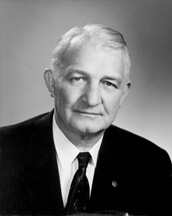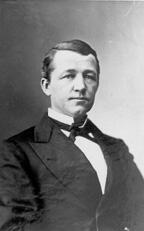
Nathan Goff Jr. (February 9, 1843 – April 23, 1920) was a United States representative from West Virginia, a Union Army officer, the 28th United States Secretary of the Navy during the administration of President Rutherford B. Hayes, a United States circuit judge of the United States Court of Appeals for the Fourth Circuit and of the United States Circuit Courts for the Fourth Circuit, and a United States senator from West Virginia. A member of the Republican Party, he served in the United States Congress during a significant period in American history and contributed to the legislative process over multiple terms in office.
Goff was born on February 9, 1843, at his family’s estate, Waldomore, in Clarksburg, Harrison County, Virginia (now West Virginia). He was the son of Waldo Goff, a prominent local figure who was elected five times to represent Harrison County in the Virginia House of Delegates. Raised in a slaveholding household that nevertheless favored the Union, Goff grew up in an environment of political engagement and sectional tension on the eve of the Civil War. He attended the Northwestern Academy in Clarksburg and later studied at Georgetown University in Washington, D.C. After the war, he pursued legal training and received a Bachelor of Laws degree from New York University School of Law in 1866.
With the outbreak of the American Civil War, Goff enlisted in the Union Army in 1861, joining the 3rd West Virginia Infantry Regiment. Reflecting both his family’s Unionist loyalties and the divided character of what would become West Virginia, he served throughout the conflict and later became a major in the 4th West Virginia Cavalry Regiment. His wartime service helped establish his public reputation and provided a foundation for his subsequent legal and political career in the newly formed state of West Virginia.
Following his graduation from law school, Goff returned to Clarksburg in 1866. That same year he became editor of the Clarksburg Telegraph, using the newspaper as a platform to advance Republican principles in a predominantly Democratic region. Admitted to the bar in 1866, he began private legal practice in Clarksburg from 1866 to 1867. He entered elective office as a member of the West Virginia House of Delegates, serving from 1867 to 1868. In 1868 he was appointed United States Attorney for the District of West Virginia, a position he held from 1868 to 1881 and again from 1881 to 1882, playing a central role in federal law enforcement during Reconstruction and its aftermath. During these years he was an active Republican candidate, though unsuccessful in bids for the United States House of Representatives in 1870 and 1874, and as the Republican nominee for Governor of West Virginia in 1876 and 1888, when Democratic candidates prevailed.
Goff’s national prominence increased when he served as the 28th United States Secretary of the Navy in 1881 under President Rutherford B. Hayes. His tenure, though brief, placed him in the Hayes Cabinet at a time when the nation was emerging from Reconstruction and beginning to modernize its institutions, including the Navy. He later became the last surviving member of the Hayes Cabinet. In 1882 he returned to West Virginia politics and, as a Republican, won election to the United States House of Representatives from West Virginia’s 1st congressional district. He served in the 48th, 49th, and 50th Congresses from March 4, 1883, to March 3, 1889. During these three consecutive terms in the House, he represented his constituents through a period of industrial expansion and political realignment, after which he declined to be a candidate for renomination and resumed private legal practice in Clarksburg from 1889 to 1892.
Goff’s judicial career began when President Benjamin Harrison nominated him on December 16, 1891, to a new joint seat on the United States Court of Appeals for the Fourth Circuit and the United States Circuit Courts for the Fourth Circuit, created by 26 Stat. 826. He was confirmed by the United States Senate and received his commission on March 17, 1892. As a federal circuit judge, he presided over cases arising from a rapidly industrializing region, including matters involving railroads, labor, and interstate commerce. When the United States Circuit Courts were abolished on December 31, 1911, he continued to serve solely on the Court of Appeals for the Fourth Circuit. His judicial service concluded with his resignation on March 31, 1913, after more than two decades on the federal bench.
In 1913, state delegate Roy Earl Parrish placed Goff’s name in nomination for the United States Senate. Elected by the West Virginia legislature over Democrat Clarence W. Watson by a vote of 60 to 43, he began his Senate term, which formally commenced on March 4, 1913, but did not immediately take his seat, choosing first to complete his service on the federal bench. He entered upon his senatorial duties on April 1, 1913, and served until March 3, 1919. During this period, which encompassed World War I and significant domestic reforms, he was Chairman of the Committee on Conservation of Natural Resources and Chairman of the Committee on Industrial Expositions in the 65th Congress. He did not seek reelection in 1918, when, for the first time under the Seventeenth Amendment, the seat was filled by popular vote. His tenure in Congress, including his earlier service in the House and his later service in the Senate, spanned crucial decades in the nation’s political and economic development.
Nathan Goff Jr. died on April 23, 1920, in Clarksburg, West Virginia. He was interred in Odd Fellows Cemetery in Clarksburg. His public legacy extended through his family: he was the father of West Virginia United States Senator Guy D. Goff and the grandfather of Louise Goff Reece, who served as a United States representative from Tennessee. His former home in Clarksburg, known as the Nathan Goff Jr. House, was listed on the National Register of Historic Places in 1976, though it was demolished in 1993 and subsequently delisted in 1994. In recognition of his service, the World War II destroyer USS Goff was named in his honor, commemorating his long career in law, politics, and national service.
Congressional Record