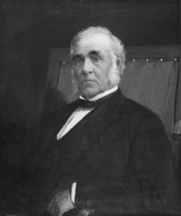
Nathan Allen Farwell (February 24, 1812 – December 9, 1893) was a politician, businessman, and United States Senator from Maine. Born in Unity, then a part of Massachusetts but now within the state of Maine, he was educated in the common schools of his native region. As a young man he supported himself and began his public engagement by teaching school from 1832 to 1833, an experience that preceded his entry into business and maritime pursuits.
In 1834 Farwell moved to East Thomaston, Maine (later part of Rockland), where he entered the manufacture of lime, a major coastal industry, and became involved in shipbuilding. His work along the Maine coast led him to become a master mariner and trader, occupations that gave him practical experience in commerce and navigation at a time when maritime trade was central to the regional economy. Seeking to broaden his professional scope, he studied law and relocated to Rockland, Maine, where he combined legal practice with business leadership. In Rockland he founded the Rockland Marine Insurance Company and served as its president, integrating his maritime background with the emerging insurance industry. From 1845 to 1847 he traveled in Europe, an extended journey that reflected both his commercial interests and his growing stature as a man of affairs.
Farwell’s political career developed alongside his business activities. A member of the Republican Party, he first held state legislative office in the Maine State Senate from 1853 to 1854. He later served in the Maine House of Representatives in 1860, marking the beginning of a sustained period of state-level service during the turbulent years leading up to and during the Civil War. He returned to the Maine State Senate from 1861 to 1862, serving as presiding officer in 1862, and again sat in the Maine House of Representatives from 1863 to 1864. Through these roles he gained legislative experience and influence in state politics at a time when questions of Union, war, and national policy dominated public life.
Farwell’s prominence in Republican politics extended to the national stage. In 1864 he was a delegate to the Baltimore Republican National Convention, which renominated President Abraham Lincoln during the Civil War. That same year he was appointed to the United States Senate as a Republican to fill the unexpired term of Senator William Pitt Fessenden of Maine. His service in Congress occurred during a significant period in American history, as the Union war effort neared its climax and the outlines of Reconstruction began to emerge. Nathan Allen Farwell served as a Senator from Maine in the United States Congress from October 27, 1864, to March 3, 1865. A member of the Republican Party, he contributed to the legislative process during this single term in office, participating in the democratic process and representing the interests of his Maine constituents. He was not a candidate for reelection in 1865.
After leaving the Senate in March 1865, Farwell resumed his activities in the insurance business in Rockland, returning to the Rockland Marine Insurance Company and his broader commercial interests. He remained engaged in national political affairs, serving as a delegate to the National Union Convention in Philadelphia in 1866, a gathering that sought to shape postwar political realignment and Reconstruction policy. His combined experience as businessman, lawyer, and legislator gave him a continuing voice in the civic life of his state even after his brief tenure in Congress.
Nathan Allen Farwell died in Rockland, Maine, on December 9, 1893. He was interred in Achorn Cemetery in Rockland, reflecting his long association with that community as a resident, businessman, and public servant. He was a cousin of noted abolitionist congressman Owen Lovejoy and antislavery editor Elijah P. Lovejoy, a family connection that linked him to prominent reform currents of his era and underscored the broader political and moral context in which his own public career unfolded.
Congressional Record