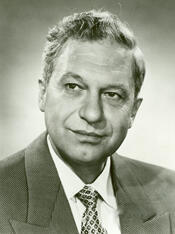
Nathan Tracy Carr (December 25, 1833 – May 28, 1885) was an American lawyer, Civil War veteran, and Democratic politician who served briefly as a U.S. Representative from Indiana from 1876 to 1877. His congressional service occurred during a significant period in American history, as the nation continued to grapple with the political, social, and economic consequences of the Civil War and Reconstruction, and he participated in the democratic process representing the interests of his Indiana constituents.
Carr was born in Corning, Steuben County, New York, on December 25, 1833. He attended the common schools of the area and pursued further education at Starkey Academy in Yates County, New York, from which he was graduated in 1851. His early life in upstate New York provided him with a basic classical and practical education that prepared him for professional study and public service.
After completing his schooling, Carr moved west to Midland County, Michigan, as part of the broader mid-nineteenth-century migration into the Great Lakes region. He studied law in Michigan and was admitted to the bar of Midland County in 1858. Following his admission, he commenced the practice of law at Vassar, Michigan. Almost immediately he entered public life, serving as a member of the Michigan State House of Representatives from 1858 to 1860, where he gained early legislative experience. He subsequently held local office as recorder of Midland County in 1861 and 1862, further establishing himself in public affairs while continuing his legal practice.
With the outbreak of the Civil War, Carr joined the Union war effort. He was commissioned a first lieutenant in the 27th Regiment, Michigan Volunteer Infantry, entering service on October 6, 1862. His military tenure, though relatively brief, formed an important part of his public career and personal identity as a Civil War veteran. He served in that capacity until his resignation on March 11, 1863. After the war, like many veterans seeking new opportunities, he relocated again, moving in 1867 to Columbus, Bartholomew County, Indiana, where he resumed the practice of law and became active in the state’s legal and political circles.
In Indiana, Carr quickly assumed a prominent role in regional legal affairs. In 1870 he was elected prosecuting attorney for the judicial circuit serving Bartholomew, Shelby, Jackson, and Brown Counties, a position that placed him at the center of criminal and civil litigation in a growing part of the state. His work as a prosecutor enhanced his reputation as a capable lawyer and Democratic officeholder and helped lay the groundwork for his subsequent elevation to national office.
Carr was elected as a Democrat to the Forty-fourth Congress to fill the vacancy caused by the death of Michael C. Kerr, Speaker of the House and representative from Indiana. Carr took his seat in the U.S. House of Representatives on December 5, 1876, and served until March 3, 1877. His single term in Congress, though brief, came at a pivotal moment marked by the contested presidential election of 1876 and the closing phase of Reconstruction. As a member of the Democratic Party representing Indiana, he contributed to the legislative process during his one term in office, participating in debates and votes that reflected the concerns of his district and party. He was an unsuccessful candidate for renomination in 1876, which limited his congressional service to the remainder of Kerr’s term.
Following his departure from Congress, Carr returned to Columbus, Indiana, where he resumed the private practice of law. His legal career soon took a judicial turn when, in 1878, he was appointed judge of the Ninth Judicial Circuit Court of Indiana. In this capacity he presided over a wide range of civil and criminal matters, applying his years of experience as a lawyer, legislator, and former prosecutor to the administration of justice at the state level. His judicial service solidified his standing as a respected figure in Indiana’s legal community.
Nathan Tracy Carr continued to reside in Columbus, Indiana, until his death on May 28, 1885. He died while still a notable member of the local bar and judiciary and was interred in the City Cemetery in Columbus. His career, spanning state legislative service in Michigan, military duty in the Civil War, prosecutorial and judicial responsibilities in Indiana, and a brief tenure in the U.S. House of Representatives, reflected the mobility and public engagement characteristic of many nineteenth-century American lawyers and politicians.
Congressional Record