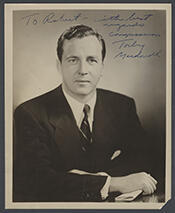
Nathan Appleton (October 6, 1779 – July 14, 1861) was an American merchant, industrial pioneer, and politician, and a leading member of the group of New England entrepreneurs known as “The Boston Associates.” As a member of the Whig Party representing Massachusetts, he contributed to the legislative process during two terms in the United States House of Representatives, serving during a significant period in American history and representing the interests of his constituents while advocating for protective tariffs and industrial development.
Appleton was born in New Ipswich, New Hampshire, the son of Isaac Appleton (1731–1806), a church deacon, and Mary Adams (1741–1827). Raised in what he later described as the “strictest form of Calvinistic Congregationalism,” he was part of a long-established New England family whose lineage traced back to Major Samuel Appleton (1625–1696) and Priscilla Baker, granddaughter of Lieutenant Governor Samuel Symonds of the Massachusetts Bay Colony. His paternal grandparents were Isaac Appleton Jr. (1704–1794) and Elizabeth Sawyer (1709–1785). Nathan Appleton was also a cousin of William Appleton (1786–1862), a prominent Boston merchant and congressman, and James Appleton (1785–1862), a noted reformer and legislator, further situating him within a network of influential New England figures.
Appleton received his early education at the New Ipswich Academy, a respected local institution that prepared many young men for college and professional life. In 1794 he entered Dartmouth College, but that same year he left his studies to begin a mercantile career in Boston, Massachusetts. There he went to work for his elder brother, Samuel Appleton (1766–1853), a successful and benevolent merchant. Nathan proved adept in commerce and, beginning in 1800, entered into partnership with his brother, a relationship that lasted until 1809. Through this experience he acquired the capital, business acumen, and commercial connections that later enabled him to play a central role in the early American textile industry and in the broader industrialization of New England.
By the second decade of the nineteenth century, Appleton had become one of the key figures in the introduction of large-scale cotton manufacturing to the United States. In 1813 he cooperated with Francis Cabot Lowell, Patrick T. Jackson, Paul Moody, and others in adapting and introducing the power loom and integrated cotton manufacturing on a large scale. They established a factory at Waltham, Massachusetts, in 1814, which employed the first power loom ever used in the United States and combined spinning and weaving under one roof. The success of this enterprise led Appleton and his associates to purchase the water power at Pawtucket Falls on the Merrimack River, where he became one of the founders of the Merrimack Manufacturing Company. The industrial settlement that developed around these factories grew into the city of Lowell, Massachusetts, of which Appleton was recognized in 1821 as one of the three principal founders. In his pamphlet The Origin of Lowell, he emphasized both the economic and social significance of this experiment in industrial organization, writing that “the contrast in the character of our manufacturing population with that of Europe has been the admiration of most intelligent strangers. The effect has been to more than double the wages of that description of labor from what they were before the introduction of this manufacture.” In addition to his manufacturing interests, Appleton was active in Boston finance; in 1818 he purchased 300 shares of the Suffolk Bank, a prominent State Street clearinghouse bank that played a central role in New England’s banking system.
Alongside his business career, Appleton pursued public service in Massachusetts state government. He served as a member of the Massachusetts General Court (the state legislature) in 1816, 1821, 1822, 1824, and 1827, participating in debates over economic policy and internal improvements during a formative period in the Commonwealth’s development. His growing prominence as a merchant-industrialist and his advocacy of protective duties and sound banking practices made him a natural spokesman for the emerging industrial and commercial interests of New England.
Appleton’s congressional service reflected these economic and political commitments. As a Whig Party representative from Massachusetts, he served in the United States House of Representatives from 1831 to 1833 and again in 1842. During these two terms in Congress, he was prominent as an advocate of protective tariffs designed to foster American manufacturing, aligning himself with the broader Whig program of economic nationalism, internal improvements, and a strong but stable banking system. His legislative work occurred during a significant period in American history marked by debates over the tariff, the national bank, and the proper role of federal power in economic development, and he consistently represented the interests of his industrial and mercantile constituents.
In addition to his political and business activities, Appleton was active in the intellectual and cultural life of Boston. He was a member of the Massachusetts Historical Society and the Academy of Science and Arts, and in 1842 he was elected a Fellow of the American Academy of Arts and Sciences. In 1854 he was elected a member of the American Antiquarian Society. He published numerous speeches and essays on currency, banking, and the tariff, the most celebrated of which was his Remarks on Currency and Banking, issued in an enlarged edition in 1858. He also wrote memoirs on the power loom and on the founding and development of Lowell, contributing significantly to contemporary understanding of the origins of American industrialization.
Appleton’s private life was closely intertwined with the social and cultural elite of Boston and New England. On April 13, 1806, he married Maria Theresa Gold (1786–1833). Two months after their marriage he commissioned the artist Gilbert Stuart to paint portraits of the newlyweds, a testament to their social standing. The couple had five children: Thomas Gold Appleton (1812–1884); Mary “Molly” Appleton (born 1813), who married British colonial governor Robert James Mackintosh; Charles Sedgwick Appleton (1815–1835); Frances “Fanny” Elizabeth Appleton (1819–1861), who in 1843 married the poet Henry Wadsworth Longfellow; and George William Appleton (1826–1827), who died in infancy. The Appletons attended the Federal Street Church in Boston. Maria Theresa Appleton died of tuberculosis in 1833. On January 8, 1839, Nathan Appleton remarried, taking as his second wife Harriot Coffin Sumner (1802–1867), daughter of Boston merchant Jesse Sumner and Harriot Coffin of Portland, Maine. They had three children: William Sumner Appleton (1840–1903), later the father of preservationist William Sumner Appleton Jr. (1874–1947); Harriet Sumner Appleton (1841–1923), who married Union Army officer Greely S. Curtis; and Nathan Appleton Jr. (1843–1906).
Appleton’s family connections extended into American literary and historical life. When his daughter Fanny married Henry Wadsworth Longfellow in 1843, he purchased for $10,000 the Cambridge house in which Longfellow had been renting rooms and gave it to the couple as a wedding gift. The house, which had served as George Washington’s headquarters during part of the American Revolutionary War, later became known as the Longfellow House–Washington’s Headquarters National Historic Site. Frances Appleton wrote to her brother Thomas on August 30, 1843, “We have decided to let Father purchase this grand old mansion,” while Longfellow’s mother observed that Appleton also acquired the land across the street “so that their view of the River Charles may not be intercepted.” Appleton himself maintained a prominent residence on Beacon Street in Boston, reflecting his status among the city’s mercantile and political elite.
In the final year of his life, Appleton suffered declining health. On July 10, 1861, his daughter Fanny Longfellow died tragically after accidentally catching fire; he was too ill to attend her funeral. Nathan Appleton died a few days later, on July 14, 1861, in Boston. He was buried in Mount Auburn Cemetery in Cambridge, Massachusetts, a resting place for many of New England’s leading figures. His career as a merchant, industrial organizer, and legislator, together with his extensive writings on economic policy and his role in the founding of Lowell, left a lasting imprint on the economic and political history of Massachusetts and the United States.
Congressional Record