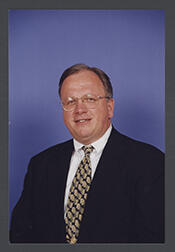
Moses Hicks Grinnell (March 3, 1803 – November 24, 1877) was an American shipper, merchant, businessman, and public official who became a United States Congressman representing New York and later a Commissioner of New York City’s Central Park. He was born in New Bedford, Massachusetts, on March 3, 1803, the son of Cornelius Grinnell (1758–1850) and Sylvia (née Howland) Grinnell (1765–1837). He was a member of a prominent New England mercantile family; his siblings included Henry Grinnell, noted for his interest in Arctic exploration, and Joseph Grinnell, who would later serve four terms in Congress representing Massachusetts as a Whig. Grinnell attended public schools in his youth and, at the age of fifteen, took his first paying job in the counting room of a bank in New York City, an early start in commerce that foreshadowed his later success in shipping and trade.
Grinnell’s business career developed in close association with his family’s maritime interests. In 1815, his brother Joseph helped establish the shipping firm that became known as Grinnell, Minturn & Co., one of the leading New York shipping houses of the nineteenth century. Moses and his brother Henry joined the firm in 1825, and in 1830 Robert Bowne Minturn entered the partnership, after which the firm operated under the name Grinnell & Minturn. The company remained active until 1880 and became especially prominent in the transatlantic and global shipping trade. Grinnell emerged as a successful New York merchant and shipper, and his standing in the commercial community led to his appointment as president of the New York Chamber of Commerce. Under his leadership and that of his partners, the firm became best known for owning the celebrated clipper ship Flying Cloud, which Grinnell purchased from shipbuilder Donald McKay in 1851 for $90,000 (approximately $2.69 million in 2024 dollars). The firm’s fleet and operations helped solidify New York City’s position as a dominant port in the age of sail.
Grinnell’s prominence in maritime affairs extended beyond his firm. In 1850, the pilot boat Moses H. Grinnell was built for the Jersey pilots and designed by noted naval architect George Steers. Owned by George W. Blunt of New York, the vessel was the first pilot boat to exhibit the fully developed long, sharp entry that became the hallmark of New York schooners, reflecting the era’s innovations in ship design. Grinnell’s name thus became associated not only with commercial shipping but also with advances in nautical engineering and pilot service on the Atlantic seaboard.
In politics, Moses Hicks Grinnell’s affiliations evolved over time, reflecting the shifting party landscape of the mid-nineteenth century. Unlike his brother Joseph, who remained a Whig while representing Massachusetts in Congress, Moses did not adhere to a single party throughout his career. He began as a Democrat, became a Whig in the 1830s, and in the 1840s was described as an “out-and-out Native American party man,” aligning himself with the nativist movement of that period. In the 1850s he joined the newly founded Republican Party, and in 1856 he served as a Republican presidential elector, supporting the party in its first national campaign. As a member of the Whig Party representing New York, Grinnell served one term in the United States House of Representatives, contributing to the legislative process during a significant period in American history. During his time in Congress he participated in the democratic process and represented the interests of his New York constituents at a moment when issues of commerce, expansion, and sectional conflict were increasingly prominent in national debates.
Grinnell’s political and social connections placed him in the orbit of national leaders during the rise of the Republican Party. In February 1860, president-elect Abraham Lincoln, en route to Washington, D.C., visited the Manhattan home of Grinnell’s daughter, where Grinnell had assembled many of New York City’s most prominent businessmen to meet the first Republican president. Following this meeting, Grinnell corresponded with Lincoln, writing letters of introduction for others and serving as a conduit between the administration and influential figures in New York’s commercial community. Although he was not himself a major policy maker on the national stage, his role as an intermediary underscored his standing in both political and business circles.
After the Civil War, Grinnell held important federal and municipal offices connected with the nation’s principal port city. He was appointed Collector of the Port of New York, serving from March 1869 to July 1870, a position of considerable responsibility in overseeing customs revenues and federal authority at the country’s busiest harbor. From July 1870 to April 1871 he served as the Port’s Naval Officer of Customs, a complementary post involved in supervising and verifying customs collections. In addition to his federal service, Grinnell became perhaps best remembered for his work as a Central Park Commissioner during the early years of the park’s design and construction. In that capacity he participated in the oversight and development of what would become one of the most important urban parks in the United States, contributing to the shaping of New York City’s public landscape. His civic prominence was later commemorated by the naming of a street in the Bronx in his honor.
Moses Hicks Grinnell spent his later years in New York City, remaining associated with the commercial and civic institutions that had defined his career. He died in Manhattan on November 24, 1877. His funeral service was held at the Unitarian Church of All Souls, reflecting his connection to that congregation, and he was buried in Sleepy Hollow Cemetery in Sleepy Hollow, New York. His life spanned the transformation of the United States from an early republic to an industrializing nation, and his activities in shipping, commerce, politics, and urban development left a lasting imprint on New York’s economic and civic history.
Congressional Record