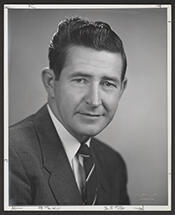
Morton Everel Post (December 25, 1840 – March 19, 1933) was an American businessman, farmer, and politician who served as a delegate to the United States House of Representatives from Wyoming Territory’s at-large congressional district. He was born on December 25, 1840, in Henrietta, New York, to Morton A. Post and Alary Wickware. He attended local schools in Medina, New York, receiving the basic education that prepared him for a life of commercial enterprise and public service on the American frontier.
In 1860, Post left New York and traveled west by railroad to the Missouri River, joining the flow of migration into the territories. That same year he led a wagon train from the Missouri River to Denver in the Colorado Territory, marking the beginning of his career as a freighter and frontier businessman. In 1864, drawn by the gold rush, he left Denver for Alder Gulch in the Montana Territory, where he engaged in mining and related commercial activities and reportedly left the region with $75,000 in gold, a substantial fortune for the time. In August 1864, he served as a delegate to the Democratic National Convention, reflecting his early involvement in party politics. In October of that year, he married Amalia Barney Simons Nichols, with whom he remained married until her death on January 28, 1897.
Post continued his freighting and overland commercial work during and after the Civil War era. In 1865, while transporting cargo with twelve other men from Atchison, Kansas, to Denver, Colorado Territory, his party was attacked by approximately one hundred Native Americans; one man was killed and nine were wounded in the encounter, illustrating the hazards of frontier commerce. In 1866, he moved to North Platte, Nebraska, then the western terminus of the Union Pacific Railroad, where he continued working as a freighter and capitalized on the rapid expansion of rail and overland trade.
In July 1867, Post moved farther west to Cheyenne in what was then Dakota Territory (soon to become part of Wyoming Territory), where he quickly emerged as a leading entrepreneur. He built the first mercantile house in Cheyenne, hauling lumber from Denver to construct the building. In the growing city he operated a general store, served as postmaster, made extensive investments in cattle, and acquired banking interests. Through these diversified enterprises he became one of the wealthiest men in the region, and by 1885 he was regarded as a millionaire. His prominence in Cheyenne’s commercial life provided the foundation for his entry into territorial politics.
Post’s public career developed alongside Wyoming’s early territorial institutions. From 1870 to 1876, he served as a member of the Laramie County Commission, participating in local governance during a formative period for the region. He advanced to the territorial legislature, serving from 1878 to 1880 as a member of the Wyoming Territorial Senate. A Democrat, he was elected as Wyoming Territory’s delegate to the United States House of Representatives and served two terms in Congress from 1881 to 1885, representing the territory’s at-large congressional district. As a member of the Democratic Party representing Wyoming, Morton Everel Post contributed to the legislative process during two terms in office, participating in the democratic process and advocating for the interests of his territorial constituents at a time when Wyoming was seeking greater development and recognition within the federal system. He declined to run for another term in 1884.
Post’s family life intersected with the broader political currents of the era, particularly the women’s suffrage movement. His wife, Amalia Post, was a prominent suffragist and served as Wyoming’s delegate to the National Woman Suffrage Association in 1871, where she met leading activists Isabella Beecher Hooker, Victoria Woodhull, and Susan B. Anthony. She played a key role in preserving women’s voting rights in Wyoming Territory by urging Territorial Governor John Allen Campbell to veto legislation that would have repealed women’s suffrage; Campbell ultimately returned the legislation unsigned, allowing Wyoming to maintain its pioneering status in women’s enfranchisement.
Despite his earlier financial success, Post’s fortunes were significantly affected by the severe winter known as the Great Blizzard of 1888, which devastated the cattle industry across the High Plains. The storm destroyed an estimated $15,000,000 worth of property, and Post’s extensive cattle interests were heavily impacted. Following these losses, he shifted his business focus and became a real estate agent in Ogden, in what was then Utah Territory. In 1890, he traveled to Europe, and upon his return he settled in Salt Lake City, where he engaged in mining investments until 1895.
In 1895, Post moved to Rancho Cucamonga, California, where he turned to agriculture and established himself as a farmer. In 1901, he purchased 2,800 acres of land in the area, developing it over the next decade before selling the property in 1910. He retired from active business in 1916 and took up residence in Los Angeles, California. In 1928, he moved to nearby Alhambra, California, where he spent his final years. Morton Everel Post died on March 19, 1933, in Alhambra and was buried in Inglewood Park Cemetery, closing a life that spanned from the antebellum East through the settlement and political development of the American West.
Congressional Record