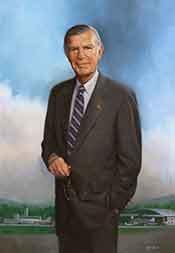
Morgan B. Williams (September 17, 1831 – October 13, 1903) was a coal industry executive and Republican politician who represented Pennsylvania’s 12th congressional district in the U.S. House of Representatives from 1897 to 1899. His career spanned mining enterprises on three continents and significant service in local, state, and national government.
Williams was born in Rhandir-Mwyn, Carmarthenshire, Wales, on September 17, 1831. He attended the public schools and, from an early age, assisted his father in the operation of a lead mine. When he was sixteen years old, his father died, and Williams assumed control of the family’s lead mining operation, gaining early experience in both the technical and managerial aspects of mining. In 1856 he left Wales for Australia, where he engaged in gold mining during the height of the Australian gold rushes. After several years abroad, he returned to Wales in August 1861.
In March 1862 Williams emigrated to the United States, settling first in Hyde Park, Pennsylvania. There he worked in the coal mines, continuing his lifelong association with extractive industries. In 1865 he moved to Wilkes-Barre, Pennsylvania, a center of the anthracite coal industry. He was appointed superintendent of the Lehigh & Wilkes-Barre Coal Company, a position he held for fourteen years, overseeing large-scale mining operations during a period of rapid industrial expansion in northeastern Pennsylvania.
Williams’s business interests broadened significantly in the late 1870s. In 1878 he joined with George and Fred Parrish to found the Red Ash Coal Company, further consolidating his position in the regional coal trade. He later became head of the Williams Coal Company in Pottsville, Pennsylvania, extending his influence within the state’s anthracite fields. Beyond coal, he served as president of the Grenville Graphite Company in Canada, was vice president of the Wilkes-Barre Deposit and Savings Bank, and sat on the board of the Spring Brook Water Supply Company. He also held financial interests in Vulcan Iron Works, reflecting his engagement with the broader industrial and financial infrastructure that supported mining and manufacturing in the region.
Alongside his business pursuits, Williams was active in local public affairs in Wilkes-Barre. He served on the Wilkes-Barre school board and on the city council for a combined period of twelve years, participating in the civic development of the growing industrial city. His local service led to higher office, and he was elected to the Pennsylvania State Senate for the 21st district, serving from 1885 to 1888. In this role he was involved in state-level legislative matters during a time when Pennsylvania’s economy and politics were closely tied to the coal and railroad industries. In 1893 he was appointed a member of the commission for the World’s Columbian Exposition in Chicago, commonly known as the Chicago World’s Fair, contributing to Pennsylvania’s representation at the major national and international exhibition.
Williams advanced to national office when he was elected as a Republican to the Fifty-fifth Congress, serving from March 4, 1897, to March 3, 1899, as the representative for Pennsylvania’s 12th congressional district. His tenure in Congress coincided with the administration of President William McKinley and the nation’s growing industrial and economic power. Although he sought another term, he was an unsuccessful candidate for reelection in 1898 and returned to private life after the close of his congressional service.
Following his departure from Congress, Williams remained engaged in coal mining and his various business interests, continuing to play a role in the economic life of northeastern Pennsylvania. He lived in Wilkes-Barre until his death there on October 13, 1903, at the age of 72. His career reflected the trajectory of a self-made industrialist and public servant whose work bridged the mining frontiers of Wales, Australia, and the United States and who participated in the civic and political institutions of his adopted state and nation.
Congressional Record