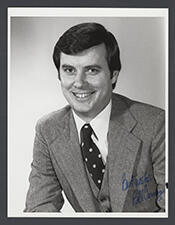
Morgan Jones was the name of two notable American actors who worked in different eras of the motion picture and television industries. Morgan Jones (actor, born 1879) (1879–1951) was an American silent film actor and screenwriter, active during the formative decades of cinema in the early twentieth century. Morgan Jones (actor, born 1928) (1928–2012) was an American film and television actor whose career spanned the postwar period and the rise of network television. Though they shared the same name and profession, they belonged to distinct generations of performers and contributed to different phases of American screen history.
The earlier Morgan Jones, born in 1879, came of age at a time when motion pictures were emerging from their experimental phase into a popular form of mass entertainment. Little is recorded in standard reference works about his early life and family background, but by the 1910s he was working in the American silent film industry, which was then centered in the Northeast before consolidating in California. As an actor, he appeared in silent productions that relied heavily on physical expression, gesture, and visual storytelling in the absence of synchronized sound. His work as a screenwriter placed him among the early generation of writers who helped define the narrative conventions of silent cinema, contributing to the development of scenario writing and the adaptation of stage and literary material for the screen.
During his career in silent film, Morgan Jones (born 1879) would have worked in an industry that was rapidly professionalizing, with the emergence of studio systems, star performers, and more complex feature-length productions. As both actor and screenwriter, he occupied a dual role that was not uncommon in the early years of film, when creative responsibilities were often shared and overlapping. His contributions came at a time when American cinema was expanding its reach domestically and internationally, and when the grammar of film—editing, close-ups, intertitles, and visual pacing—was being refined. He continued his work through the 1920s, a period that saw the peak of silent film artistry, before the advent of sound fundamentally altered the medium. Morgan Jones died in 1951, having witnessed the transition from the earliest silent shorts to the fully established sound film era.
Morgan Jones (actor, born 1928), by contrast, belonged to the generation that entered the profession after the consolidation of Hollywood’s studio system and the introduction of sound. Born in 1928, he grew up during the Great Depression and World War II, coming of age just as television was beginning to emerge as a major cultural force. He pursued a career in acting in the postwar years, when film and television were both expanding and when new opportunities were opening for character actors in episodic series, anthology programs, and feature films. As an American film and television actor, he worked in an industry that had become highly structured, with established unions, casting systems, and a clear division between film and television production.
Over the course of his career, Morgan Jones (born 1928) appeared in a variety of screen roles that reflected the changing tastes and formats of mid- to late-twentieth-century entertainment. He participated in the growth of television as it moved from live broadcasts to filmed series, and as genres such as westerns, crime dramas, and situation comedies became staples of American viewing. His work in film placed him within a mature Hollywood system that produced both studio pictures and, increasingly, independent productions. Through these appearances, he contributed to the broad tapestry of American popular culture in the second half of the twentieth century. Morgan Jones died in 2012, closing a career that had spanned decades of technological and artistic change in both film and television.
Taken together, the careers of Morgan Jones (1879–1951) and Morgan Jones (1928–2012) illustrate the evolution of American screen acting from the silent era to the age of television. The earlier Morgan Jones helped shape the foundations of cinematic storytelling as a silent film actor and screenwriter, while the later Morgan Jones worked within the fully developed systems of sound film and broadcast television. Their lives and work, separated by nearly half a century, reflect the broader history of American entertainment and the enduring opportunities and challenges faced by professional actors across changing media and eras.
Congressional Record