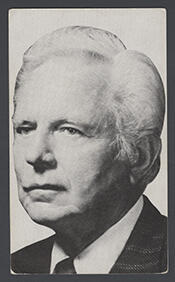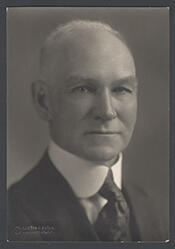
Miner Gibbs Norton (May 11, 1857 – September 7, 1926) was an American lawyer and Republican politician who served one term as a U.S. Representative from Ohio from 1921 to 1923. Over the course of a long legal and political career centered in Cleveland, he held a series of important party and federal appointments and contributed to the legislative process during a significant period in American history.
Norton was born on May 11, 1857, in Andover, Ashtabula County, Ohio. He was educated in the public schools and then pursued further studies at National Normal University in Lebanon, Ohio, and at Baldwin-Wallace College in Berea, Ohio. He continued his higher education at Mount Union College in Alliance, Ohio, from which he graduated in 1878. Demonstrating an early commitment to the law, he went on to study at the law department of Yale College, earning his degree there in 1880.
In 1880, Norton was admitted to the bar and commenced the practice of law in Cleveland, Ohio, which remained his professional base for the rest of his life. He quickly became active in Republican Party affairs and rose in party leadership. In the early 1890s he served as chairman of the Republican State executive committee, a position that placed him at the center of statewide party organization and strategy. From 1895 to 1899 he served as director of law for the city of Cleveland, acting as the municipality’s chief legal officer during a period of urban growth and increasing complexity in local governance.
Norton’s experience and standing in Republican circles led to federal appointment. From 1905 to 1909 he served as United States appraiser for the northern district of Ohio, a customs-related position that involved the valuation of imported goods and oversight of federal revenue interests in the region. He continued to practice law in Cleveland alongside these public responsibilities, maintaining a prominent role in the city’s legal community.
A member of the Republican Party, Norton was elected to the Sixty-seventh Congress as a Representative from Ohio, serving from March 4, 1921, to March 3, 1923. His single term in the U.S. House of Representatives coincided with the early 1920s, a significant period in American history marked by post–World War I adjustment, economic change, and debates over domestic and foreign policy. As a member of the House of Representatives, he participated in the democratic process, contributed to the legislative work of the Congress, and represented the interests of his Ohio constituents. He was an unsuccessful candidate for reelection in 1922 to the Sixty-eighth Congress, bringing his formal congressional service to a close after one term in office.
After leaving Congress, Norton resumed the practice of law in Cleveland, returning to the profession in which he had long been established. His public service continued, however, when President Calvin Coolidge appointed him collector of customs at Cleveland on February 7, 1925. In this federal post he oversaw customs operations in one of Ohio’s principal commercial centers and remained in that capacity until his death.
Miner Gibbs Norton died in Cleveland, Ohio, on September 7, 1926, while still serving as collector of customs. He was interred in Oakdale Cemetery in Jefferson, Ashtabula County, Ohio, thus returning in death to the region of his birth after a career that spanned local, state, and national public service.
Congressional Record