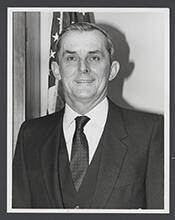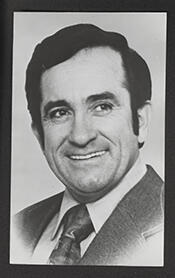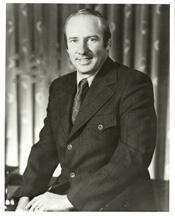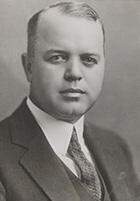
Michael Lambert Igoe (April 16, 1885 – August 21, 1967) was a 20th‑century American politician, lawyer, and jurist who served as a United States representative from Illinois, an Illinois state representative, United States Attorney for the Northern District of Illinois, and a United States district judge of the Northern District of Illinois. A member of the Democratic Party, he served one term in the United States House of Representatives during a significant period in American history and held a series of influential positions in Illinois and federal public life.
Igoe was born on April 16, 1885, in Saint Paul, Minnesota. He moved to Chicago, Illinois, where he was educated in the city’s parochial schools and at De La Salle Institute, a Catholic secondary school. He pursued legal studies in Washington, D.C., earning a Bachelor of Laws degree from Georgetown Law in 1908. That same year he was admitted to the bar and immediately commenced the practice of law in Chicago, beginning a legal career that would span more than three decades and intersect closely with his rising prominence in Democratic politics.
Alongside his private law practice, which he maintained in Chicago from 1908 to 1939, Igoe entered public service early in his career. He was elected to the Illinois House of Representatives in 1912 and served continuously from 1913 to 1930, becoming an important figure in state legislative affairs and Democratic Party organization. From 1915 to 1917 he served as Chief Assistant United States Attorney for the Northern District of Illinois, gaining experience in federal prosecution. He also held local administrative office as a member of the board of South Park Commissioners from 1924 to 1932, a position that placed him at the center of Chicago’s park and infrastructure governance.
Igoe’s political ambitions extended beyond the state legislature. In 1920 he ran for Cook County state’s attorney, winning the Democratic primary against incumbent Maclay Hoyne but losing the general election to Republican nominee Robert E. Crowe. He was a delegate to the Democratic National Convention in 1928 and served on the Democratic National Committee from 1930 to 1932, reflecting his growing influence within the party at both the state and national levels. He sought the Democratic nomination for Governor of Illinois in 1932 but was defeated by Henry Horner, a setback that occurred amid intense internal struggles over leadership of the Illinois Democratic Party.
Following the death of Chicago Democratic leader George E. Brennan in 1928, Igoe became deeply involved in the factional battles that reshaped the party’s power structure. He aligned with Edward J. Kelly to lead the South Park Board faction, one of four major centers of influence that emerged from Brennan’s organization. As Anton Cermak consolidated control over the party, the South Park Board faction joined forces with the board of the Cook County Sanitary District. A subsequent investigation by the state’s attorney into the sanitary district uncovered mismanagement, payroll padding, illegal favors, and nepotism, leading in 1930 to grand jury indictments of T. J. Crowe, James Whalen, John J. Touhy, and Edward J. Kelly. Cermak sought to placate Igoe amid the scandal by securing his reelection to the South Park Board in 1929 and later by supporting his election as national committeeman for the Democratic Party in 1930. Igoe attempted, unsuccessfully, to regain control of the sanitary district in December 1930 with the help of Whalen and Touhy, and relations between Igoe and Cermak became increasingly strained. Nevertheless, on Christmas Eve 1930, Igoe publicly praised Cermak at a Democratic Party meeting, and two days later Cermak endorsed Igoe as floor leader of the Illinois House. Igoe supported and defended Cermak’s subsequent mayoral campaign in his own district, but Cermak received only 187 votes there, compared with 3,000 votes for the previous Democratic candidate, a result widely viewed within the party as disastrous. In 1931 Igoe decided to run for governor; fearing that Igoe might accumulate excessive power and weaken his own position, Cermak refused to endorse him.
In the context of the New Deal era, Igoe advanced to national office. In 1934 he was elected as a Democrat to the Seventy‑fourth United States Congress, representing Illinois in the House of Representatives from January 3, 1935, until his resignation effective June 2, 1935. During this single term in Congress, he participated in the legislative process at a time of far‑reaching federal economic and social reforms, representing the interests of his Illinois constituents as part of the Democratic majority supporting President Franklin D. Roosevelt’s program. He resigned his seat to accept appointment as United States Attorney for the Northern District of Illinois, a position he held from 1935 to 1939. While serving as U.S. Attorney, he remained active in electoral politics and ran unsuccessfully in the Democratic primary for the 1938 United States Senate election in Illinois.
Igoe’s federal judicial career began with a recess appointment from President Franklin D. Roosevelt on November 21, 1938, to a new seat on the United States District Court for the Northern District of Illinois created by statute (52 Stat. 584). Roosevelt formally nominated him to the same position on January 5, 1939. The United States Senate confirmed his nomination on February 9, 1939, and he received his commission on March 4, 1939. His appointment placed him among the many federal judges named by President Roosevelt during the expansion and redefinition of the federal judiciary in the mid‑20th century. Igoe continued to serve on the bench for more than a quarter century, assuming senior status on August 31, 1965, while remaining available to hear cases and assist with the court’s docket.
Michael Lambert Igoe’s service as a federal judge terminated on August 21, 1967, upon his death in Chicago, Illinois. He was interred in All Saints Cemetery in Des Plaines, Illinois. Throughout his career, he combined legislative, prosecutorial, and judicial responsibilities, leaving a record of service that spanned local, state, and federal government during a transformative era in Illinois and American political history.
Congressional Record