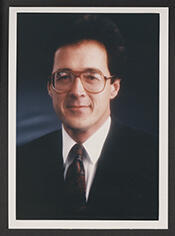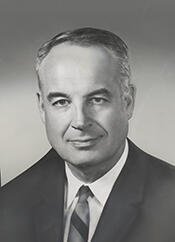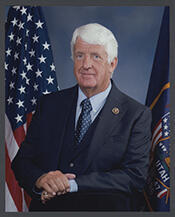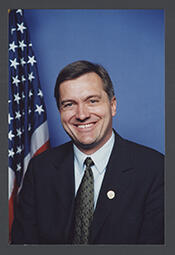
Merrill Alonzo Cook (born May 6, 1946) is an American politician and businessman who served as a Republican member of the United States House of Representatives from Utah from 1997 to 2001. Born in Philadelphia, Pennsylvania, he was raised in Salt Lake City, Utah, the son of Melvin A. Cook, a scientist who pioneered the development of slurry explosives. Growing up in a family closely tied to scientific and industrial innovation, Cook was exposed early to the mining and explosives industries that would later shape his business career.
Cook attended public schools in Salt Lake City and graduated from East High School in 1964. He went on to study at the University of Utah, earning his undergraduate degree in 1969. Seeking advanced training in business and management, he enrolled at Harvard Business School, where he received a Master of Business Administration (M.B.A.) in 1971. Shortly after completing his graduate studies, he began his professional career as a budget analyst with Arthur D. Little, Inc., gaining experience in corporate analysis and strategic planning.
In 1973, Cook founded the Cook Slurry Company, a mining explosives manufacturer, drawing directly on both his family’s scientific background and his own business training. He served as president and chief executive officer of the company, building it into a significant enterprise in the explosives field. His success in business provided the financial base for his later political activities and enabled him to self-finance many of his campaigns. Over the course of his political career, his personal expenditures for campaigns for office and ballot initiatives exceeded $4 million, underscoring the extent to which his business success underwrote his public ambitions.
Cook’s entry into politics preceded his congressional service by more than a decade and was marked by persistence and a willingness to operate both within and outside the traditional party structure. He first sought public office in 1984, running unsuccessfully for the Utah Board of Education. He then ran for mayor of Salt Lake City in a 1985 special election and for the Salt Lake County Commission in 1986, again without success. Frustrated with the existing party framework, he founded the Utah Independent ticket in 1988 and used it as a vehicle for a gubernatorial bid that year. In the 1988 race for Governor of Utah, he finished third with 21 percent of the vote, drawing enough support from both major parties that incumbent Republican Governor Norm Bangerter won reelection with only a 40 percent plurality over Democratic challenger and former Salt Lake City mayor Ted Wilson, who received 38 percent. Cook made a second run for governor in 1992, this time finishing second with 34 percent of the vote, behind Republican nominee Mike Leavitt’s 42 percent and ahead of Democrat Stewart Hanson, who received 23 percent. In 1994, he sought a seat in the U.S. House of Representatives from Utah’s 2nd Congressional District, placing third with 18 percent of the vote behind Republican victor Enid Greene and Democratic incumbent Karen Shepherd.
Cook’s successful bid for Congress came in the 1996 election cycle. After Republican incumbent Enid Greene announced she would not seek reelection due to a scandal, Cook rejoined the Republican Party and entered the race for the open 2nd District seat. At the state Republican convention, he finished second to the party establishment’s preferred candidate, Salt Lake City accountant R. Todd Neilson, but secured enough delegate support to force a primary. In the subsequent primary election, Cook defeated Neilson by a margin of four percentage points. In the general election, he faced Democrat Rocky Anderson, a future mayor of Salt Lake City. Arguing that Anderson was “too socially liberal for Utah,” Cook campaigned as a conservative Republican and won the November 1996 election with 56 percent of the vote, despite losing the portion of the district that encompassed Salt Lake City. He began his service in the United States House of Representatives on January 3, 1997, representing Utah as a Republican and contributing to the legislative process during a significant period in American political life.
During his two terms in Congress, from 1997 to 2001, Cook participated in the work of the House of Representatives and represented the interests of his constituents in Utah’s 2nd District. A member of the Republican Party, he took part in the broader legislative debates of the late 1990s, a time marked by discussions over federal spending, economic policy, and the role of the federal government at the close of the 20th century. His tenure was not without controversy. In 1998, he was accused of instances of erratic behavior, most notably an obscenity-laced tirade at Utah Republican Party headquarters after learning that his name had been omitted from a party get-out-the-vote effort to which his campaign had contributed $25,000. He was briefly banned from state Republican headquarters as a result. Nevertheless, he won reelection in 1998 by a margin of approximately 10 percentage points. Shortly after that election, he demoted his chief of staff, Janet Jenson, who in an internal email criticized his conduct, colorfully remarking that “Merrill has taken up permanent residence in whacko land. If he asks you to fax his underwear to the speaker’s office, please just do it.”
Cook’s political fortunes declined in the 2000 election cycle. Democrats nominated environmental consultant Jim Matheson, son of former Democratic governor Scott Matheson, for the 2nd District seat. Polls showed Cook trailing Matheson, causing concern among Republicans about their prospects in a district historically more favorable to Democrats than other parts of Utah. Although the national Republican Party strongly backed Cook, local Republicans remained uneasy. In a sign of his vulnerability, he was forced into a Republican primary against Derek Smith, a computer executive making his first run for office. In that primary, Smith defeated Cook by a 15-point margin, 57 percent to 42 percent. Smith went on to lose the general election to Matheson in November 2000. Cook’s service in Congress concluded on January 3, 2001, after two terms in office.
After leaving Congress, Cook remained active in Utah politics, frequently seeking a return to elected office. In 2004, he ran as an independent candidate for mayor of Salt Lake County, receiving 8 percent of the vote in a race won by Democrat Peter Corroon. In 2006, he attempted to challenge Republican Congressman Chris Cannon in Utah’s 3rd Congressional District but was eliminated on the first ballot at the Republican state convention. He sought his former 2nd District seat again in 2008; however, at the Utah State Republican Convention on May 10, 2008, he lost the party’s nomination to Bill Dew, who received 69 percent of the delegate vote. In 2010, Cook entered the race for the Republican nomination for the United States Senate from Utah, challenging incumbent Senator Bob Bennett, but he did not advance beyond the first round of balloting at the state convention. Over these years, his repeated candidacies continued to be heavily self-financed, consistent with his earlier political pattern.
In his personal life, Cook married Camille Sanders, an opera singer, with whom he had five children. The couple were members of the Church of Jesus Christ of Latter-day Saints and were active in their faith community. Camille Cook died on January 15, 2015, from complications related to Alzheimer’s disease. Cook’s life and career thus reflect a combination of entrepreneurial success, persistent political engagement both within and outside the Republican Party, and a notable, if often controversial, role in Utah’s public affairs at the close of the 20th century and into the early 21st century.
Congressional Record