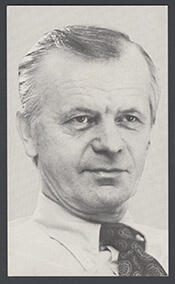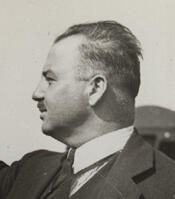
Melvin Joseph Maas (May 14, 1898 – April 13, 1964) was a U.S. Representative from Minnesota and a decorated major general of the United States Marine Corps Reserve during World War II. A member of the Republican Party, he served eight terms in the United States House of Representatives between 1927 and 1945, representing his Minnesota constituents during a period marked by Prohibition, the Great Depression, the New Deal, and the Second World War.
Maas was born on May 14, 1898, and grew up in Minnesota. As a young man he entered military service during World War I, serving with the United States Marine Corps. After the war, he remained with the Marine Corps until 1925. During this period he also pursued his education, enrolling at St. Thomas College in St. Paul, Minnesota, where he completed his studies and graduated in 1919. Following his graduation, he continued his education at the University of Minnesota in Minneapolis. After leaving active Marine Corps service in 1925, he received a Marine Corps commission and subsequently transferred to the Marine Corps Reserve, beginning a long association with the reserve forces that would continue throughout his political career and into World War II.
In civilian life during the 1920s, Maas joined his brothers in the insurance business in Minnesota. He also became active in public affairs during the era of national Prohibition. He aligned himself with the anti-Prohibition movement, advocating modification of the existing law to permit the legal consumption of beer and wine. This stance helped shape his political identity as he entered electoral politics. In 1926 he ran for Congress as a Republican and defeated the incumbent, Oscar Keller. At age twenty-eight, he became the youngest member of Congress upon his election on November 2, 1926.
Maas was elected as a Republican to the 70th, 71st, and 72nd Congresses, serving from March 4, 1927, to March 3, 1933. His service in Congress occurred during a significant period in American history, encompassing the late 1920s economic expansion and the onset of the Great Depression. As a member of the House of Representatives, he participated in the legislative process and represented the interests of his Minnesota constituents. He was an unsuccessful candidate for renomination in 1932. On December 13, 1932, while still in office, Maas displayed notable personal courage when a 25-year-old department store clerk, Marlin Kemmerer of Allentown, Pennsylvania, pulled a gun in the House visitors’ gallery and demanded to address the chamber about the nation’s economic crisis. As many members fled, Maas stood his ground, shouted to the man that no one was permitted to speak in the House while armed, and ordered him to throw down the weapon. The gunman complied, was arrested, and removed by police. For this act of bravery, Maas was awarded the Carnegie Medal.
After a brief interruption in his congressional career, Maas returned to the House when he was elected to the 74th, 75th, 76th, 77th, and 78th Congresses, serving from January 3, 1935, to January 3, 1945. During these years he continued to be active in both legislative affairs and military service. In the 1930s he served as commander of the Reserve Marine Squadron in Minneapolis, Minnesota, and maintained his proficiency as a Marine Corps aviator at the Naval Reserve Aviation Base (NRAB) Minneapolis, flying with squadron VO-6MR. On September 24, 1938, while piloting aircraft FF-2, Bureau Number 9365, during a routine training flight from NRAB Minneapolis, the plane struck a bump on the runway during takeoff and became airborne without sufficient speed. It settled back to the ground, the left wheel collapsed, the right wheel followed, and the left wingtip dug into the ground, causing the aircraft to pitch to a nearly vertical position before settling upright. Maas suffered minor cuts and bruises, while his passenger, Private S. Jaroseak Jr., was unhurt. The aircraft sustained major damage to the engine and cowling and was stricken from service.
With the approach and outbreak of World War II, Maas’s dual roles as legislator and Marine officer converged. In the summer of 1941 he was recalled to active duty as a colonel in the Marine Corps while still serving in Congress. He was assigned to the staff of Admiral William F. Halsey Jr. and later transferred to the staff of Vice Admiral Frank J. Fletcher, commander of Task Force 17, participating in operations in the Solomon Islands campaign. Subsequently, he was assigned to the staff of General Douglas MacArthur, the South West Pacific Area commander, as a Marine Corps observer. Serving under MacArthur in Australia, Maas took part in the New Guinea campaign. During the final phase of the Battle of Milne Bay in early September 1942, he volunteered as an observer and auxiliary gunner on a bomber during a reconnaissance mission. Over the course of an eight-hour flight, he assisted in disabling an enemy airdrome and helped drop food and supplies to an isolated U.S. Army outpost. For his actions on this mission, he was awarded the Silver Star by the U.S. Army on September 3, 1942. He continued to serve in the South Pacific until the fall of 1942, when he was ordered back to the United States for further congressional duties.
Maas remained in Congress through the remainder of the war’s early years but was an unsuccessful candidate for reelection in 1944 to the 79th Congress. After leaving the House in January 1945, he returned to active duty with the Marine Corps. During the final stages of World War II, he participated in the Battle of Okinawa and, in May 1945, was appointed commander of Awasa Air Base. For his leadership and performance as base commander, he was awarded the Legion of Merit with Combat “V.” During this period he was wounded in the face by an enemy bomb, an injury that permanently damaged his optic nerve and ultimately resulted in his total blindness. Over the course of his military career he rose to the rank of major general in the Marine Corps Reserve, reflecting his long and distinguished record of service.
In his later years, Maas lived with the consequences of his wartime injuries, including his eventual complete loss of sight. He remained identified in public memory as both a long-serving Republican representative from Minnesota and a highly decorated Marine officer whose career spanned World War I, the interwar years, and World War II. Melvin Joseph Maas died on April 13, 1964, closing a life marked by significant contributions to both the legislative work of the United States Congress and the military service of the United States Marine Corps.
Congressional Record