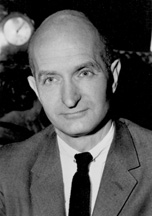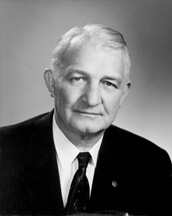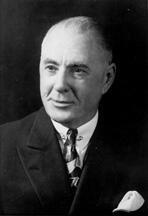
Matthew Mansfield Neely (November 9, 1874 – January 18, 1958) was an American Democratic politician from West Virginia who served in both houses of the United States Congress and as the twenty-first governor of West Virginia. A prominent New Deal Democrat, he is the only West Virginian to have served in the U.S. House of Representatives, the U.S. Senate, and as governor, and he is also the only person to have held a full term in both of West Virginia’s Senate seats. Over the course of his long public career, he contributed to the legislative process during ten terms in Congress, with Senate service extending, in nonconsecutive periods, from 1923 until his death in 1958.
Neely was born in Grove, Doddridge County, West Virginia, on November 9, 1874. He attended Salem College of West Virginia (now Salem University) but did not complete a degree. At the outbreak of the Spanish–American War in 1898, he entered the United States Army as a private, an experience that shaped his later public service and outlook. After his military service, he pursued legal studies and earned a law degree from West Virginia University. In 1903 he married Alberta Ramage, establishing a family base in Fairmont, Marion County, where he would build both his legal practice and his political career.
Following his admission to the bar, Neely entered the practice of law in Fairmont, West Virginia. He quickly became active in local affairs and was elected mayor of Fairmont in 1908. His success in municipal government and his growing reputation as a skilled orator helped launch him onto the state and national political stage. Known throughout his career as a master orator, he developed a style that resonated with working-class voters and party activists alike; in later years, Fairmont State University would honor his rhetorical gifts by sponsoring an annual oratory contest in his name.
Neely’s congressional career began in the House of Representatives. A member of the Democratic Party, he was elected to the U.S. House in 1913 to fill an unexpired term and represented West Virginia at a time of significant national change. He was reelected in 1914, 1916, and 1918, serving four consecutive terms. During this period he supported the policies of President Woodrow Wilson, a stance that contributed to his defeat in the 1920 election amid a broader national reaction against Wilsonian progressivism and the aftermath of World War I. Nonetheless, his early House service established him as a committed participant in the democratic process and a vigorous representative of his constituents’ interests.
In 1922 Neely successfully ran for the United States Senate as a Democrat and took office in March 1923. He was defeated for reelection in 1928, but two years later, in 1930, he sought the state’s other Senate seat and was elected, beginning a second, distinct period of Senate service. He was reelected in 1936. During the 1930s he emerged as a staunch New Deal Democrat, advocating for organized labor and civil rights and aligning himself with the reform agenda of President Franklin D. Roosevelt. He sponsored federal anti-lynching legislation, though it never passed, and in 1935 he introduced the first bill to create a federal Department of Peace, reintroducing similar measures in 1937 and 1939. In 1937, working with Senator Homer Bone and Representative Warren Magnuson, he helped introduce the National Cancer Institute Act, which Roosevelt signed into law on August 5, 1937, establishing a key federal institution for cancer research. He also sponsored the Neely Anti-Block Booking Act, which gradually curtailed the major film studios’ control over movie theaters by restricting the practice of forcing theaters to book films in large blocks.
In 1940 Neely ran for governor of West Virginia and, after winning the election, resigned the remaining two years of his Senate term to assume the governorship in January 1941. As governor, he presided over a period of reform in state government. His administration saw the creation of a State Planning Board and significant reforms in child welfare laws, reflecting his interest in social policy and public administration. Despite these accomplishments, Neely soon regretted leaving the Senate and strongly considered resigning the governorship to run for his old Senate seat in 1942. In later life he expressed deep regret about his gubernatorial term, believing that it had interrupted his more influential work in the national legislature.
Upon the expiration of his gubernatorial term in 1944, Neely returned to federal office by winning election to his old House seat, resuming service in the U.S. House of Representatives. He served one term but was defeated for reelection in 1946. Two years later, in 1948, he again sought a Senate seat and was elected, beginning his third nonconsecutive tenure in the upper chamber. When he returned to the Senate after his time as governor and as a House member, he had lost his seniority, but he retained many friendships among senior senators. He was assigned the chairmanship of the Senate Committee on the District of Columbia, where he became the leading proponent of home rule for the District, urging that the government of the District of Columbia be turned over to its residents. His advocacy anticipated reforms that would only be realized several years after his death.
During his final Senate service, Neely continued to identify with New Deal and pro-labor positions and maintained a generally progressive stance on civil rights. In the 1930s he had sponsored anti-lynching legislation, and in the 1950s he refused to sign the 1956 Southern Manifesto, a document opposing the Supreme Court’s decision in Brown v. Board of Education (1954), even though school segregation had been legally required in West Virginia until that ruling. However, he did not vote on the Civil Rights Act of 1957. Neely also played an important role as a political mentor; he was credited by West Virginia attorney and future congressman George W. Crockett Jr. with converting Crockett from a Lincoln Republican to a New Deal Democrat. Neely’s family legacy in public life continued through his grandson, Richard Neely, an author and politician who served as chief justice of the West Virginia Supreme Court of Appeals.
Matthew Mansfield Neely served in Congress during a significant period in American history, spanning the Progressive Era, the New Deal, World War II, and the early Cold War. Across his ten terms in federal office—multiple terms in the House and three nonconsecutive periods in the Senate—he consistently represented the interests of his West Virginia constituents while engaging in national debates over economic reform, social welfare, civil rights, and federal governance. He died in office on January 18, 1958, while serving as a United States Senator from West Virginia, and was interred in Woodlawn Cemetery in Fairmont, West Virginia.
Congressional Record