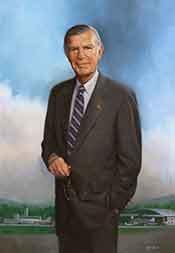
Mathias Morris (September 12, 1787 – November 9, 1839) was an American politician from Pennsylvania who served as an Anti-Jacksonian and Whig member of the U.S. House of Representatives for Pennsylvania’s 6th congressional district from 1835 to 1839. He was born on September 12, 1787, in Hilltown, Pennsylvania, in Bucks County. Little is recorded about his family background, but his early years were spent in the rural communities of southeastern Pennsylvania, an area that would remain the center of his professional and political life.
Morris attended the public schools in Newtown and Doylestown, Pennsylvania, receiving the basic education typical of the period. He subsequently undertook the study of law, preparing for admission to the bar through the traditional apprenticeship system then prevalent in the United States. In 1809 he was admitted to the bar and commenced the practice of law in Newtown, Pennsylvania, establishing himself as an attorney in Bucks County.
Building on his legal career, Morris entered public service in the early nineteenth century. In 1819 he was appointed deputy attorney general, a position that reflected his growing prominence in the local legal community and entrusted him with responsibilities in the enforcement of state law. His standing in Bucks County and the surrounding region continued to rise, and he moved from legal office into elective politics at the state level.
Morris served as a member of the Pennsylvania State Senate for the 5th district from 1828 to 1833. His tenure in the state senate coincided with a period of significant political realignment in Pennsylvania and the nation, as factions coalesced into the emerging Second Party System. As a state senator, he participated in shaping legislation affecting his district and the Commonwealth, gaining legislative experience that would later inform his service in the national legislature.
In 1835, Morris was elected as an Anti-Jacksonian to the Twenty-fourth Congress, representing Pennsylvania’s 6th congressional district in the U.S. House of Representatives. He was reelected as a Whig to the Twenty-fifth Congress, serving continuously from March 4, 1835, to March 3, 1839. As a member of the Whig Party representing Pennsylvania, he contributed to the legislative process during two terms in office, participating in debates and votes during a significant period in American history marked by controversy over executive power, economic policy, and internal improvements. During the Twenty-fifth Congress he served as chairman of the United States House Committee on Expenditures in the Department of State, overseeing and reviewing the fiscal administration of that department. His role on this committee placed him at the center of congressional efforts to supervise federal spending and ensure accountability in the conduct of foreign affairs and related governmental functions.
Morris sought to continue his congressional career but was an unsuccessful candidate for reelection in 1838 to the Twenty-sixth Congress. After leaving Congress in 1839, he returned to private life in Bucks County. He died on November 9, 1839, in Doylestown, Pennsylvania, a community where he had been educated and long associated through his legal and political work. His career reflected the trajectory of a regional lawyer rising to state and national office during the formative decades of the American party system, representing the interests of his Pennsylvania constituents in both the state senate and the U.S. House of Representatives.
Congressional Record