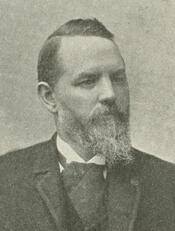
Marriott Henry Brosius (March 7, 1843 – March 16, 1901) was a Republican member of the U.S. House of Representatives from Pennsylvania who served seven consecutive terms in Congress from 1889 until his death in 1901. A prominent figure in late nineteenth-century national politics, he represented his Pennsylvania constituents in the United States Congress during a significant period in American history and contributed actively to the legislative process.
Brosius was born on March 7, 1843, in Colerain Township, Lancaster County, Pennsylvania. He received his early education locally and attended Thomas Baker’s Academy, a noted school in the region. Growing up in rural Lancaster County, he was shaped by the agricultural and small-town environment of mid-nineteenth-century Pennsylvania, which would later inform his understanding of the needs and interests of his constituents.
During the American Civil War, Brosius enlisted as a private in Company K of the Ninety-seventh Regiment, Pennsylvania Volunteers, in October 1861, for a three-year term of service. He reenlisted in May 1864, continuing his commitment to the Union cause. He was honorably discharged in December 1864, having served through some of the most demanding years of the conflict. In recognition of his conduct under fire, he was commissioned a second lieutenant on February 28, 1865, for bravery on the field of battle, marking a notable personal distinction in his military career.
After the war, Brosius pursued formal education and professional training. He attended the State Normal School at Millersville, Pennsylvania, an institution dedicated to preparing teachers and advancing higher learning in the state. He then studied law at the law department of the University of Michigan at Ann Arbor, one of the leading law schools in the country at the time. Upon completion of his legal studies, he was admitted to the bar in 1868 and commenced the practice of law in Lancaster, Pennsylvania. His legal career in Lancaster established him as a respected attorney and provided the foundation for his subsequent entry into public life.
Brosius’s congressional career began with his election as a Republican to the Fifty-first Congress, taking office on March 4, 1889. He was subsequently reelected to the six succeeding Congresses, serving continuously from 1889 to 1901 as a Representative from Pennsylvania. As a member of the House of Representatives, Marriott Brosius participated fully in the democratic process and represented the interests of his constituents during a period marked by industrial expansion, monetary debates, and evolving federal policy. His seven terms in office reflected sustained support from voters and a growing influence within the Republican Party and the House.
Within Congress, Brosius held important committee leadership positions that underscored his stature as a legislator. He served as chairman of the United States House Committee on Reform in the Civil Service during the Fifty-fourth and Fifty-fifth Congresses, where he was involved in oversight and advancement of civil service reforms that aimed to professionalize the federal workforce and reduce patronage. In the Fifty-sixth Congress, he became chairman of the United States House Committee on Banking and Currency, placing him at the center of national discussions over financial policy, banking regulation, and currency issues at the turn of the century. Through these roles, he contributed to shaping key aspects of federal administrative and financial policy.
Marriott Henry Brosius served in Congress until his death in office. He died in Lancaster, Pennsylvania, on March 16, 1901, at the age of 58, bringing to a close more than a decade of continuous congressional service. His death placed him among the members of the United States Congress who died in office in the early twentieth century. He was interred in Greenwood Cemetery in Lancaster, where his grave marks the resting place of a Civil War veteran, lawyer, and long-serving Representative from Pennsylvania. Memorial addresses on his life and character were delivered in the House of Representatives and the Senate and later published in 1902, reflecting the esteem in which he was held by his colleagues.
Congressional Record