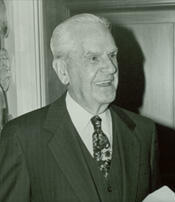
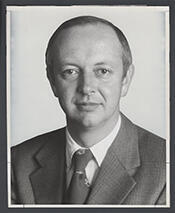
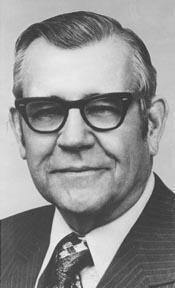
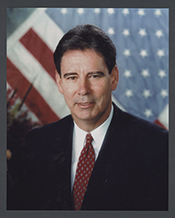
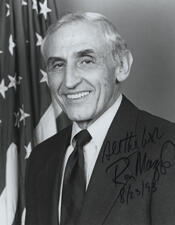
Marion Eugene Snyder (January 26, 1928 – February 16, 2007) was an American politician and lawyer who served as a Republican Representative from Kentucky in the United States Congress from 1963 to 1987. Over the course of 11 terms in the House of Representatives, he represented two different congressional districts in his native Kentucky and contributed to the legislative process during a significant period in American history, participating in the democratic process and representing the interests of his constituents.
Snyder was born in Louisville, Kentucky, and attended the public schools there. He graduated from duPont Manual High School in Louisville and went on to study at the University of Louisville. He subsequently attended the Jefferson School of Law, from which he graduated before entering the legal profession. His education in law and his early ties to Louisville laid the foundation for a career that combined legal practice, local public service, and later national legislative responsibilities.
In 1950, Snyder began practicing law in Louisville. He quickly became involved in local government, and in 1954 he was appointed city attorney of Jeffersontown, Kentucky, a position he held for approximately four years. Building on this experience, Snyder was elected magistrate for the first district of Jefferson County in the fall of 1957 and was re-elected to that office in 1961. Alongside his public duties, he pursued several business interests, including farming, real estate, insurance, and construction, which broadened his familiarity with economic and development issues that would later inform his work in Congress.
Snyder was first elected to the United States House of Representatives in 1962 from Kentucky’s 3rd congressional district, based in Louisville, and took office in January 1963. A member of the Republican Party, he entered Congress at a time of major national debates over civil rights and social policy. During his initial term, he was one of the relatively few Republicans to vote against the Civil Rights Act of 1964, a stance that placed him in the minority within his party on that landmark legislation. He later supported the Civil Rights Act of 1968, reflecting an evolution in his voting record on civil rights issues. A supporter of Republican presidential nominee Barry M. Goldwater in 1964, Snyder was defeated for re-election that year by former Louisville mayor Charlie Farnsley amid the overwhelming Democratic landslide led by President Lyndon B. Johnson and Vice President Hubert H. Humphrey.
After his 1964 defeat, Snyder moved from Louisville to nearby Oldham County, which lay within Kentucky’s 4th congressional district. The 4th District, which had absorbed much of the Kentucky side of the Cincinnati metropolitan area in the 1960s round of redistricting, was rapidly trending Republican due to an influx of new residents from the Cincinnati region. Snyder capitalized on these demographic and political changes and, in 1966, successfully challenged 11-term Democratic incumbent Frank Chelf, defeating him by almost eight points. He took office from the 4th District in January 1967 and was subsequently re-elected eight times with relatively little difficulty, solidifying his position as a long-serving Republican voice from Kentucky in the House.
During his two decades representing the 4th District, Snyder’s congressional service coincided with a transformative era in American politics and public policy, including the Vietnam War, the civil rights movement, the Watergate scandal, and the conservative ascendancy of the late 20th century. He was known for his attention to infrastructure and regional development. In 1982, Congressman Snyder secured federal funds to construct a beltway around Louisville, a major transportation and economic project for the region. In recognition of his role in obtaining this funding, a portion of Interstate 265 around Louisville was named the Gene Snyder Freeway in 1986. His name was also later given to the federal courthouse building in Louisville and to a general aviation airport near Falmouth, Kentucky (K62), underscoring his lasting impact on the state’s public infrastructure.
Snyder’s political strength in the 4th District was tested in 1984, when Democrat Pat Mulloy mounted a strong challenge and came close to unseating him. Snyder’s narrow survival in that race was aided in part by President Ronald Reagan’s landslide victory in Kentucky, where Reagan won by nearly twenty points. Facing the prospect of another difficult contest against Mulloy, Snyder chose not to seek an 11th full term in 1986, bringing his continuous service in the House to a close in January 1987. His departure opened the way for Republican Jim Bunning, who had been the unsuccessful Republican gubernatorial nominee in 1983 against Martha Layne Collins, to win the seat and continue Republican representation in the district.
In his later years, Snyder remained a figure associated with Kentucky’s mid- to late-20th-century political development, particularly in the Louisville and northern Kentucky regions. The public facilities bearing his name reflected both his long tenure in office and his focus on transportation and judicial infrastructure. Marion Eugene Snyder died on February 16, 2007, in Naples, Florida. His career, spanning local legal practice, county office, and more than two decades in Congress, left a durable imprint on Kentucky’s political and physical landscape.
Congressional Record