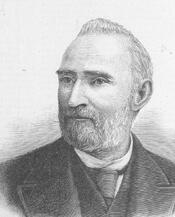
Marion Biggs (May 2, 1823 – August 2, 1910) was an American slave owner and Democratic politician who served two terms as a United States Representative from California from 1887 to 1891. Over the course of his public life, he participated in the legislative process during a significant period in American history, representing the interests of his constituents in the U.S. House of Representatives.
Born on May 2, 1823, Biggs came of age in the antebellum United States, a period marked by the expansion of slavery and intensifying sectional conflict. As an American slave owner, he was directly connected to the slaveholding society that shaped much of the nation’s political and economic life prior to the Civil War. His early years unfolded against this backdrop of national tension and transformation, experiences that would inform his later political outlook and public service.
Details of Biggs’s formal education are not extensively documented in surviving records, but like many nineteenth-century politicians, he likely received a combination of local schooling and practical training in business, agriculture, or law. His move into public life reflected the broader pattern of mid-nineteenth-century American political engagement, in which local prominence and economic standing often served as the foundation for higher office.
By the time Biggs established himself in California, the state had undergone rapid change following the Gold Rush and its admission to the Union in 1850. California’s evolving economy, growing population, and strategic importance on the Pacific coast created new political opportunities. Within this context, Biggs aligned with the Democratic Party, which was a dominant force in many parts of the state during the late nineteenth century. His standing in the community and party support eventually led to his election to national office.
Biggs was elected as a Democrat to the Fiftieth and Fifty-first Congresses, serving as a Representative from California from March 4, 1887, to March 3, 1891. During these two terms in the United States House of Representatives, he contributed to the legislative process at a time when the nation was grappling with issues of industrialization, western development, and the lingering political and social consequences of the Civil War and Reconstruction. As a member of the House, he participated in debates, committee work, and votes that shaped federal policy, and he took part in the democratic process by representing the interests and concerns of his California constituents.
Biggs’s congressional service coincided with significant national developments, including growing debates over tariffs, federal regulation of commerce, and the role of the federal government in managing western lands and resources. While the detailed record of his individual positions and sponsored measures is limited in surviving summaries, his tenure placed him among the lawmakers responsible for navigating these questions during the late Gilded Age. His service from 1887 to 1891 marked the peak of his national political career.
After leaving Congress at the conclusion of his second term in 1891, Biggs returned to private life. Like many former members of the House in that era, he likely remained engaged in local affairs and party politics, drawing on his experience in national government and his longstanding ties to his community. He lived through the turn of the twentieth century, witnessing the United States’ emergence as an industrial and international power, even as the legacy of slavery and sectional conflict—of which he had been a direct participant as a slave owner—continued to shape American society.
Marion Biggs died on August 2, 1910. His life spanned from the early antebellum period through the Civil War, Reconstruction, and into the modernizing United States of the early twentieth century. Remembered as a Democratic Representative from California who served two terms in Congress from 1887 to 1891, his career reflects both the opportunities and the profound moral contradictions of American public life in the nineteenth century.
Congressional Record