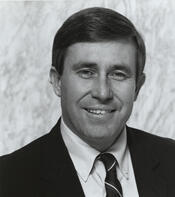
Manuel Simeon Corley (February 10, 1823 – November 20, 1902) was a U.S. Representative from South Carolina and a prominent figure in the political and religious life of his state during the mid-nineteenth century. Known as “Sim” Corley, he was born in Lexington County, South Carolina, where he spent his early years and received his initial education. He attended Lexington Academy for four years, an experience that provided him with the basic classical and literary training common to local academies of the period. By 1838, while still a young man, he had entered into business, beginning a career in commerce that helped establish his standing in the community.
Corley’s early public prominence developed alongside his religious and reform activities. A leader in South Carolina’s Lutheran church, he became active in denominational affairs and was recognized as an influential lay figure within that tradition. In the mid-1850s he extended his influence into the realm of public opinion and social reform by serving as editor of the South Carolina Temperance Standard in 1855 and 1856. In this role, he advocated temperance and moral reform and later asserted that he had been the only editor in South Carolina to condemn as “disgraceful” the 1856 assault by South Carolina Senator Preston Brooks on Massachusetts Senator Charles Sumner on the floor of the United States Senate. His editorial stance, combined with his religious leadership, marked him as a moral reformer in a period of intensifying sectional conflict.
In the early 1850s, as talk of secession began to gain strength in South Carolina, Corley publicly opposed the movement. His outspoken Unionist views placed him at odds with many of his contemporaries in the state, and his resistance to secession was so pronounced that an effort was made to expel him from South Carolina. Despite this hostility, he remained in the state and continued his business and religious work. His experience during this period illustrated the tensions faced by Southern Unionists who opposed disunion yet lived in communities increasingly committed to secession.
During the Civil War, Corley’s trajectory reflected the complex loyalties of many Southerners. In 1863 he entered the Confederate States Army, aligning himself with the military forces of his home state despite his earlier opposition to secession. He served until the closing days of the conflict and was captured by Union troops at Petersburg, Virginia, on April 2, 1865. Following the collapse of the Confederacy, he took the oath of allegiance to the United States on June 5, 1865, formally restoring his political status and enabling him to participate in the Reconstruction-era reordering of South Carolina’s political life.
Corley emerged as an important Republican figure during Reconstruction. As a member of the Republican Party representing South Carolina, he contributed to the legislative process during one term in office. He first reentered public life as a delegate to the South Carolina Constitutional Convention of 1868, a key body that reshaped the state’s fundamental law in the aftermath of the Civil War and the abolition of slavery. That same year he ran for Congress as a Republican and was elected to the Fortieth Congress. He served as a U.S. Representative from July 25, 1868, to March 3, 1869, during a significant period in American history when Congress was engaged in implementing Reconstruction policies, redefining citizenship, and overseeing the reintegration of the former Confederate states. In this capacity, Corley participated in the democratic process and represented the interests of his South Carolina constituents at the national level.
After his term in Congress, Corley continued to hold a series of public offices that reflected both federal and state responsibilities. In 1869 he was appointed a special agent of the United States Treasury, a position that involved duties connected with federal financial administration during the challenging Reconstruction years. In 1870 he served as commissioner of agricultural statistics of South Carolina, a role that underscored the central importance of agriculture to the state’s economy and the need for accurate data in a period of economic transition from slave to free labor. Later, in 1874, he was elected treasurer of Lexington County, returning to local office and managing county finances as Reconstruction gave way to a new political order in South Carolina.
In his later years, Corley remained in Lexington County, where he had been born and where he had spent much of his life in business, religious leadership, and public service. He lived to see the end of Reconstruction and the establishment of the post-Reconstruction political system in South Carolina. Manuel Simeon Corley died in Lexington, South Carolina, on November 20, 1902. He was interred in St. Stephen’s Lutheran Cemetery, reflecting the enduring connection between his public career and his long-standing involvement in the Lutheran church and the civic life of his community.
Congressional Record