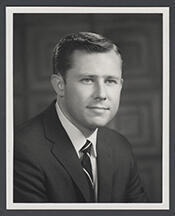
Lyman Law (August 19, 1770 – February 3, 1842), son of Richard Law and father of John Law, was a United States Representative from Connecticut and a prominent lawyer and legislator in his native state. He was born in New London, Connecticut, into a family already distinguished in public affairs; his father, Richard Law, was a noted jurist who served as a delegate to the Continental Congress and later as a federal judge. Growing up in New London, Lyman Law pursued classical studies in preparation for higher education and a professional career.
Law attended Yale College, where he received a classical education and was graduated in 1791. Following his graduation, he read law in the customary manner of the period and completed his legal studies in Connecticut. He was admitted to the bar in 1793 and commenced the practice of law in New London. His legal career developed in tandem with growing involvement in public life, and his standing in the community was reinforced by both his family’s reputation and his own professional accomplishments at the bar.
Law’s state political career was extensive and spanned several decades. He was first elected to the Connecticut House of Representatives in 1801 and returned to that body in 1802, 1806, 1809, 1810, 1819, and 1826. Within the House he quickly assumed positions of leadership, serving as speaker in 1806, 1809, and 1810. His repeated elections and multiple terms as speaker reflected his influence in state politics and his alignment with the Federalist Party, which was then dominant in much of New England.
In national politics, Law was elected as a Federalist to the Twelfth, Thirteenth, and Fourteenth Congresses, serving in the U.S. House of Representatives from March 4, 1811, to March 3, 1817. His tenure in Congress covered the period of the War of 1812 and its aftermath, years in which New England Federalists were often critical of the Madison administration’s war policies. Representing Connecticut at a time of regional economic and political tension, Law participated in the legislative debates of a Congress that addressed issues of war, finance, and national recovery. After completing three consecutive terms, he did not return to Congress and resumed his legal and civic activities in Connecticut.
Beyond his formal political offices, Law was active in fraternal and civic organizations. He was the sixth Grand Master of the Masonic Grand Lodge of Connecticut, serving from 1821 to 1822, a position that underscored his prominence in the social and civic life of the state. His leadership in the Masonic order complemented his public service and reflected the close connections between professional, political, and fraternal networks in early nineteenth-century New England.
Law’s family continued his tradition of public service into the next generation. His son John Law served as a United States Representative from Indiana, extending the family’s influence into the expanding western states. Another son, William Henry Law, was a member of the Connecticut General Assembly, maintaining the Law family’s longstanding involvement in the political affairs of their home state.
Lyman Law spent his later years in New London, remaining a respected figure in the community where he had been born, educated, and had practiced law for most of his life. He died in New London on February 3, 1842. He was originally buried in the “Second Burial Ground” in the city, but in 1851 his remains were reinterred in Cedar Grove Cemetery, a newer and more prominent burial place in New London, where his grave marks the resting place of a long-serving lawyer, legislator, and congressman of early republican Connecticut.
Congressional Record