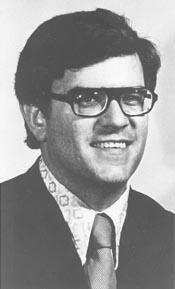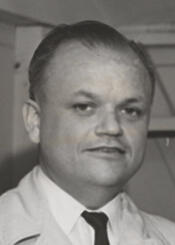
Lucien Norbert Nedzi (May 28, 1925 – June 9, 2025) was an American attorney and Democratic politician from Michigan who served for two decades in the United States House of Representatives. Born in Detroit, Michigan, he grew up in the city’s Polish American community, an experience that would shape his later political base and outlook. Coming of age during the Great Depression and World War II, he entered public life with a strong awareness of the economic and social challenges facing working-class urban constituencies.
Nedzi served in the United States Army during World War II, an experience that preceded and informed his later work on national security and intelligence issues in Congress. After his military service, he pursued legal studies and became an attorney, establishing himself professionally in Michigan. His legal training and early work in public service laid the groundwork for a career that combined law, administration, and legislative leadership.
From 1955 to 1961, Nedzi served as public administrator of Wayne County, Michigan, a position that involved managing estates and public legal matters in one of the nation’s largest urban counties. In this role he gained practical experience in public administration and governance, and he built a reputation as a capable and diligent public official. His work in Wayne County connected him closely with Detroit and its surrounding communities, providing a platform for his subsequent election to Congress.
Nedzi was elected as a member of the United States House of Representatives in 1960 and took office in 1961, beginning a congressional career that lasted until 1981. A member of the Democratic Party, he represented Michigan’s 1st congressional district from 1961 to 1965 and, following redistricting, Michigan’s 14th congressional district from 1965 to 1981. Over 10 consecutive terms in office, he participated actively in the legislative process during a period marked by the civil rights movement, the Vietnam War, the Watergate scandal, and significant shifts in domestic and foreign policy. Throughout his tenure, he represented the interests of his largely urban and industrial constituents, reflecting the concerns of Detroit and its neighboring communities.
During his years in Congress, Nedzi held several important leadership positions. In 1975 he chaired the House Select Committee on Intelligence, a body initially known as the Nedzi Committee in recognition of his role. The committee was created in the wake of growing public concern over the activities of U.S. intelligence agencies, and his leadership placed him at the center of congressional efforts to examine and reform intelligence practices. In addition to his work on intelligence oversight, he served as chair of the United States Congressional Joint Committee on the Library, which oversees the Library of Congress and related institutions, and he also chaired the United States House Committee on House Administration, a key committee responsible for the internal operations and administration of the House of Representatives.
Nedzi’s congressional service, spanning from 1961 to 1981, coincided with a transformative era in American political life. As a long-serving Democratic representative from Michigan, he contributed to debates on national security, government accountability, and the functioning of Congress itself. His committee leadership roles reflected both the confidence of his colleagues and his expertise in institutional governance. After leaving Congress at the conclusion of his final term in 1981, he returned to private life, remaining identified with the legal profession and with the public service legacy he had built over more than a quarter century in government.
Lucien Norbert Nedzi died on June 9, 2025, at the age of 100. His long life encompassed service in World War II, local administration in Wayne County, and two decades in the U.S. House of Representatives, during which he helped shape congressional oversight of intelligence and contributed to the internal administration of the House.
Congressional Record