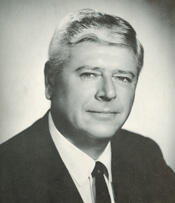
Littleton Purnell Dennis (July 21, 1786 – April 14, 1834) was an American politician who served in the United States House of Representatives, the Maryland House of Delegates, the Maryland State Senate, and on the Maryland Executive Council. He was born on July 21, 1786, at the family estate known as “Beverly” in Pocomoke City, Worcester County, Maryland, the son of Henry Dennis and Anne Purnell Dennis. He was part of a prominent Eastern Shore family and was a nephew of Congressman John Dennis (1771–1806) and a cousin of Littleton Dennis Jr. and of John Dennis (1807–1859), who also later served in Congress.
Dennis received his early education at home under private tutors before attending Washington Academy in Somerset County, Maryland. He subsequently enrolled at Yale College, from which he graduated in 1803. After completing his collegiate studies, he read law, was admitted to the bar, and commenced the practice of law in Maryland. His legal training and family connections on the Eastern Shore helped establish him as a figure of influence in local and state affairs in the early decades of the nineteenth century.
Dennis began his public career in the Maryland House of Delegates, where he served multiple, nonconsecutive terms. He was first elected to the House of Delegates in 1810, returned to serve again in 1815 and 1816, and then held office once more from 1819 to 1821. During this period he also participated in national politics as a presidential elector, casting electoral votes in the presidential elections of 1812, 1824, and 1828. Through these roles he became increasingly identified with the evolving opposition to Andrew Jackson and the emerging realignment of national political parties.
In addition to his legislative work in the House of Delegates, Dennis held important positions in Maryland’s state government. He was elected to the Maryland State Senate in 1827 and served there until his resignation in 1833. While a state senator, he was also appointed to the Maryland Executive Council in 1829, a body that advised the governor and shared in certain executive responsibilities under the state’s constitutional framework. His service in both the Senate and on the Executive Council placed him at the center of Maryland’s political life during a period of significant debate over internal improvements, banking, and the balance of power between state and federal authorities.
Dennis advanced to national office when he was elected as an Anti-Jacksonian to the United States House of Representatives in 1832, representing Maryland in the Twenty-third Congress. He took his seat on March 4, 1833. As a member of the Anti-Jacksonian Party, and later affiliating himself with the newly founded Whig Party, Dennis contributed to the legislative process during one term in office at a time of intense partisan conflict over President Andrew Jackson’s policies, including issues such as the national bank and federal authority. In Congress he participated in the democratic process and represented the interests of his Maryland constituents within the broader national debates of the early 1830s.
Dennis never married and had no children. While serving in Congress, he died in office on April 14, 1834, in Washington, D.C. His death placed him among the members of the United States Congress who died while still in service during the nineteenth century. He was interred in the Congressional Cemetery in Washington, D.C., where his burial reflects both his status as a national legislator and his connection to the political life of the early republic.
Congressional Record