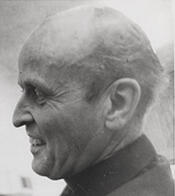
Leverett Atholville Saltonstall (September 1, 1892 – June 17, 1979) was an American lawyer and Republican politician from Massachusetts who served three two-year terms as the 55th Governor of Massachusetts and for more than twenty years as a United States senator, from 1945 to 1967. An internationalist in foreign policy and a moderate on domestic issues, he was widely regarded as a conciliatory and pragmatic figure within the Republican Party and was the only member of the Republican Senate leadership to vote for the censure of Senator Joseph McCarthy. Over more than three decades in public life, he became known as an unspectacular but highly effective legislator and party leader, adept at drafting bills and brokering compromise.
Saltonstall was born on September 1, 1892, in Chestnut Hill, Massachusetts, to Richard Middlecott Saltonstall, an attorney, and Eleanor Brooks Saltonstall, an heiress to the Peter Chardon Brooks fortune. Both the Saltonstall and Brooks families had deep colonial New England roots, and he could trace his ancestry to passengers on the Mayflower; his grandfather and great-grandfather, both also named Leverett Saltonstall, had been prominent in Massachusetts civic life. His parents’ social circle included leading figures of the era, among them future President Theodore Roosevelt. Raised in an affluent and politically connected environment, he was educated at the private Noble and Greenough School in Dedham, Massachusetts, and later at the Evans School for Boys in Mesa, Arizona, an elite ranch school whose students included Nicholas Roosevelt.
Saltonstall attended Harvard College, from which he graduated in 1914. At Harvard he distinguished himself in athletics as well as academics. He captained the first American crew to win the Grand Challenge Cup at the Henley Royal Regatta in 1914, a landmark achievement in international rowing. He also played football and hockey, and he scored a dramatic overtime goal in a 1914 hockey victory over Princeton led by star player Hobey Baker. After his undergraduate years he remained involved in Harvard athletics, coaching the freshman football team in 1915. He then enrolled at Harvard Law School, earning his law degree in 1917. While a law student he married Alice Wesselhoeft (1893–1981) of Jaffrey, New Hampshire, in 1916. The couple eventually had six children, including Emily (1920–2006), who served as a WAVE and was at one time the daughter-in-law of polar explorer Richard Byrd; Peter Brooks Saltonstall, who was killed in action at the Battle of Guam in 1944; William L. Saltonstall (1927–2009), who later became a member of the Massachusetts Senate; and Susan (1930–1994), who became a horse breeder.
Upon completing his legal studies, Saltonstall entered military service during World War I. He served as a first lieutenant in the 301st Field Artillery Regiment of the 76th Division and spent six months in France. He was discharged from the United States Army in 1919 and returned to Massachusetts, where he joined the law firm of his uncle. In 1930 he became a compatriot of the Massachusetts Society of the Sons of the American Revolution, reflecting both his family heritage and his own wartime service. His early postwar years combined the practice of law with a growing interest in public affairs and Republican Party politics.
Saltonstall’s political career began at the local level in Newton, Massachusetts. A socially progressive Republican, he served as an alderman in Newton from 1920 to 1922. At the same time, from 1921 to 1922, he held the post of second assistant district attorney of Middlesex County under his uncle, Endicott Peabody Saltonstall. He was elected to the Massachusetts House of Representatives in 1922, representing the 5th Middlesex district, and served continuously in the state legislature through successive terms in 1923–1924, 1925–1926, 1927–1928, 1929–1930, 1931–1932, 1933–1934, and 1935–1936. Within the House he rose steadily in influence, becoming Speaker of the Massachusetts House of Representatives in 1929 and holding that position until 1937. His tenure as Speaker coincided with the onset of the Great Depression, and he gained a reputation for administrative competence and an ability to manage competing factions within his party.
In 1936, Saltonstall sought to advance to statewide office by pursuing the Republican nomination for Governor of Massachusetts. At the party convention, conservative forces prevailed in awarding the gubernatorial nomination to John W. Haigis, while Saltonstall’s supporters secured for him the nomination for lieutenant governor. In the general election both Haigis and Saltonstall were defeated by their Democratic opponents, although Saltonstall’s loss was by a narrow margin of just over 7,000 votes, close enough to justify a recount that he declined to pursue. Undeterred, he ran again for governor in 1938 and won a decisive victory over former Boston mayor James Michael Curley, who had emerged weakened from a bruising Democratic primary contest with incumbent Governor Charles F. Hurley. Saltonstall was reelected governor in 1940 and 1942, though his 1940 victory was by an extremely narrow margin. As governor he mediated a major Teamsters strike, reduced state taxes, and oversaw the retirement of approximately 90 percent of Massachusetts’s bonded debt. His leadership during this period of economic recovery and wartime mobilization brought him national recognition, and he served as president of the National Governors Association from 1943 to 1944 and as the fifth president of the Council of State Governments in 1944.
In 1944, Saltonstall was elected to the United States Senate in a special election to fill the unexpired term created by the resignation of Senator Henry Cabot Lodge Jr. He defeated Democrat John H. Corcoran in that race and subsequently won reelection three times, defeating John I. Fitzgerald in 1948, Foster Furcolo in 1954, and Thomas J. O’Connor in 1960. His Senate service extended from January 1945 to January 1967. Early in his first term, in April 1945, he was among a group of about a dozen senators and representatives who toured the Buchenwald concentration camp at the invitation of General Dwight D. Eisenhower, an experience intended to document and attest to the reality of Nazi atrocities. In the Senate, Saltonstall held several leadership positions, including Senate Republican Whip and chair of the Senate Republican Conference from 1957 to 1967. He served on five influential committees and was widely regarded as a moderating force between the conservative and progressive wings of the Republican Party. The Washington Post characterized him as neither liberal nor conservative, but as a politician guided by common sense. He supported key elements of the emerging postwar consensus, including an internationalist foreign policy and a limited but active federal role in social policy.
Saltonstall’s legislative record reflected his moderate Republican orientation and his willingness to support civil rights and social welfare measures. He voted in favor of the Civil Rights Acts of 1957, 1960, and 1964, the 24th Amendment to the United States Constitution abolishing the poll tax in federal elections, and the Voting Rights Act of 1965. He was one of thirteen Republican senators who voted for the creation of Medicare in 1965. Within his party’s leadership he stood out for his independence when, in 1954, he became the only member of the Republican Senate leadership to vote for the censure of Senator Joseph McCarthy, underscoring his concern for institutional integrity and responsible governance. Throughout his Senate career he was known for his skill in crafting legislative language and finding compromise formulas that could secure broad support, and when he left office after more than thirty years in politics he had accumulated relatively few personal or partisan enemies.
Saltonstall chose not to seek reelection in 1966, in part to open the way for Edward Brooke, a rising figure in Massachusetts Republican politics who went on to become the first African American popularly elected to the United States Senate. After leaving public office in January 1967, Saltonstall retired to his farm in Dover, Massachusetts, where he lived as a gentleman farmer and remained a respected elder statesman of his party. He died of congestive heart failure on June 17, 1979, at the age of 86, and was buried in Harmony Grove Cemetery in Salem, Massachusetts, a city long associated with his family. His public service was later commemorated in Boston by the naming of the Saltonstall Building in his honor.
Congressional Record