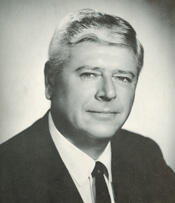
Leonard Covington (October 30, 1768 – November 14, 1813) was a United States Army brigadier general and a member of the United States House of Representatives. He was born in Aquasco, Prince George’s County, Maryland, where he was raised in the post-Revolutionary era in a region closely tied to the early political and military life of the new nation. Little is recorded about his early childhood, but his family background and upbringing in Maryland placed him within the social and economic networks that often led to public service in the late eighteenth century.
Covington received a practical education suited to a young man expected to enter public life, and he read law as part of his early professional preparation. By the time he reached adulthood, the United States was confronting the challenges of consolidating its independence and securing its frontiers, circumstances that would shape his career. His legal training and familiarity with public affairs helped prepare him for both military and legislative responsibilities, and he soon combined these pursuits with landownership and plantation management typical of his class and region.
Covington began his military career in the context of the young republic’s efforts to secure its borders and maintain order in the interior. He entered the United States Army and rose through the ranks during the 1790s, a period marked by frontier conflicts and the need for a regular force to support federal authority. His early service contributed to his reputation as a capable officer and laid the foundation for later advancement. Over time he became closely associated with the professionalization of the Army in the years between the American Revolution and the War of 1812.
In addition to his military responsibilities, Covington entered political life as a member of the Republican Party, the dominant political force in Maryland and much of the nation during the early nineteenth century. As a member of the Republican Party representing Maryland, Leonard Covington contributed to the legislative process during one term in office. Leonard Covington’s service in Congress occurred during a significant period in American history, participating in the democratic process and representing the interests of constituents at a time when issues of national expansion, relations with European powers, and the role of the federal government were vigorously debated. His experience as a military officer informed his perspective on defense and frontier policy, and his term in the House of Representatives placed him among the generation of leaders who shaped the early federal government.
After his service in Congress, Covington returned to full-time military duty as tensions with Great Britain intensified in the years leading up to the War of 1812. He continued to advance in rank and responsibility, and by the time of that conflict he had become a brigadier general in the United States Army. In this capacity he commanded troops in the northern theater of operations, where American forces sought to challenge British control and influence along the Canadian border. His leadership during this period reflected both his long experience in uniform and his commitment to national service.
Covington’s final campaign came during the War of 1812, when he took part in operations along the St. Lawrence River. In November 1813 he was engaged in the advance on Montreal, a key objective in American strategy against British Canada. During the Battle of Crysler’s Farm on November 11, 1813, he was mortally wounded while leading his brigade in action. He died a few days later, on November 14, 1813, bringing to a close a career that had spanned both the legislative and military spheres at a formative time in United States history. His death in service underscored the risks borne by early American military leaders and contributed to his remembrance as a figure who combined political representation with battlefield command.
Congressional Record