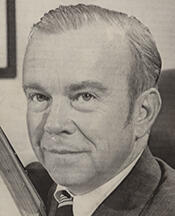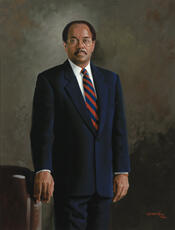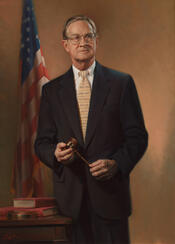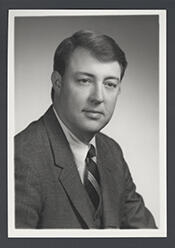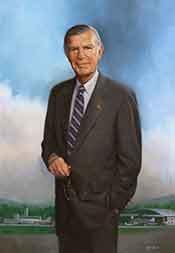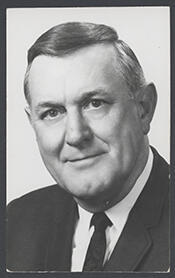
Lawrence Gordon Williams (September 15, 1913 – July 13, 1975) was an American businessman, military veteran, and Republican politician who served four terms in the United States House of Representatives, representing Pennsylvania’s 7th congressional district from 1967 to 1975. His congressional tenure spanned a period of major national upheaval, including the Vietnam War, the civil rights era, and the Watergate scandal, during which he participated in the legislative process and represented the interests of his suburban Philadelphia constituents.
Born on September 15, 1913, Williams came of age in the early twentieth century, a time marked by economic volatility and, later, global conflict. Details of his early family life and upbringing are not extensively documented in public sources, but his formative years preceded the Great Depression and the Second World War, experiences that shaped the outlook of many in his generation. He would later draw on this background in both business and public service.
Williams pursued a career in business before entering national politics, establishing himself as an American businessman in Pennsylvania. His work in the private sector provided him with experience in management and economic affairs, which he later brought to his legislative responsibilities. Like many of his contemporaries, he also served in the armed forces; as a military veteran, he was part of the broad cohort of World War II–era and postwar servicemen whose military experience informed their approach to public life and national security issues.
Building on his business and military background, Williams entered elective office as a member of the Republican Party. He was elected to the U.S. House of Representatives from Pennsylvania’s 7th congressional district and took his seat in the Ninetieth Congress on January 3, 1967. He was subsequently reelected to three additional terms, serving continuously through the Ninety-first, Ninety-second, and Ninety-third Congresses, and remained in office until January 3, 1975. During these four terms in Congress, Williams contributed to the legislative process at a time when the House of Representatives was grappling with questions of war and peace, civil rights, federal spending, and governmental accountability. As a member of the House, he participated in debates, committee work, and votes that shaped federal policy, and he worked to represent the interests and concerns of his Pennsylvania constituents within the broader framework of national priorities.
Williams’s service in Congress occurred during a significant period in American history, and his role as a Republican representative from a suburban district placed him at the intersection of shifting political alignments and evolving public expectations of government. While detailed records of his specific committee assignments and sponsored legislation are limited in the available summaries, his eight years in office coincided with major legislative initiatives on domestic policy and foreign affairs, and he took part in the democratic process that produced those measures.
After leaving Congress at the conclusion of his fourth term in 1975, Williams’s public career came to a close in the same year. He died on July 13, 1975. His life encompassed service as a businessman, military veteran, and four-term member of the U.S. House of Representatives, and his congressional career reflected the responsibilities and challenges faced by legislators during one of the most turbulent eras of twentieth-century American politics.
Congressional Record