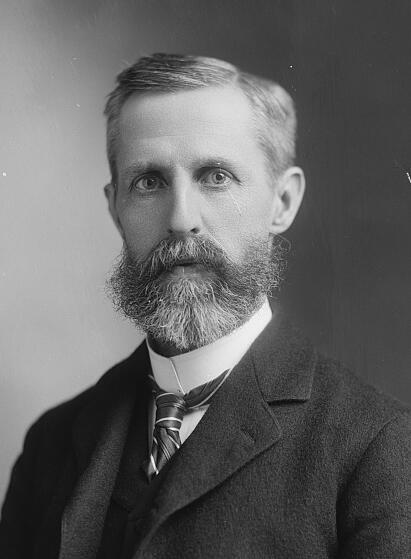
Laird Howard Barber (October 25, 1848 – February 16, 1928) was an American lawyer, jurist, and politician who served as a Democratic member of the U.S. House of Representatives from Pennsylvania from 1899 to 1901. Over the course of a varied public career, he was active in education, local government, national legislative service, and the judiciary, and he contributed to the legislative process during one term in Congress at the turn of the twentieth century.
Barber was born on a farm near Mifflinburg, Union County, Pennsylvania, on October 25, 1848. He attended local schools and prepared for college at the Mifflinburg Academy, a regional institution that provided classical and preparatory instruction for higher education. Demonstrating early academic promise, he matriculated at Lafayette College in Easton, Pennsylvania, where he pursued a liberal education and graduated in 1871. His collegiate training laid the foundation for his later work as both an educator and a lawyer.
Following his graduation from Lafayette College, Barber embarked on a career in education. He taught school at Mount Carmel, Pennsylvania, gaining practical experience in classroom instruction. In 1875 he became principal of the public schools in Mauch Chunk, Pennsylvania (later renamed Jim Thorpe), a position he held until 1880. In this role he oversaw the administration of the local school system during a period of growth in public education, managing both curricular and organizational responsibilities for the community’s schools.
While engaged in educational work, Barber studied law, preparing himself for admission to the bar. In 1881 he was admitted to the bar in Carbon County, Pennsylvania, and commenced the practice of law in Mauch Chunk. He quickly became active in local civic affairs. In 1890 he was elected a director of the Mauch Chunk School Board and served as its president and treasurer, reflecting continued involvement in educational governance. He also served as secretary of the town council, participating in the administration of municipal affairs and gaining experience in public service and local policymaking.
Barber’s involvement in local politics and public administration led him to seek higher office. A member of the Democratic Party, he was an unsuccessful candidate for election to the United States House of Representatives in 1896. Persisting in his political ambitions, he ran again and was elected as a Democrat to the Fifty-sixth Congress, serving as a Representative from Pennsylvania from March 4, 1899, to March 3, 1901. His service in Congress occurred during a significant period in American history, following the Spanish–American War and amid debates over imperial policy, economic development, and domestic reform. As a member of the House of Representatives, Barber participated in the democratic process and represented the interests of his Pennsylvania constituents, contributing to the legislative work of the chamber during his single term. He was not a candidate for renomination in 1900.
After leaving Congress in 1901, Barber resumed the practice of law in Mauch Chunk. He continued to build his legal reputation, which culminated in his election in 1913 as president judge of the Fifty-sixth Judicial District of Pennsylvania, encompassing Carbon and Monroe Counties. In this judicial capacity he presided over civil and criminal matters in the Court of Common Pleas, exercising significant influence over the administration of justice in the region. He was reelected president judge in 1923, a reflection of the confidence placed in his judicial temperament and legal acumen, and he continued to serve on the bench for the remainder of his life.
Laird Howard Barber died in Mauch Chunk, Pennsylvania, on February 16, 1928, while still serving as president judge of the Fifty-sixth Judicial District. He was interred in Evergreen Cemetery in East Mauch Chunk, Pennsylvania. His career spanned education, local government, national legislative service, and the state judiciary, marking him as a prominent public figure in northeastern Pennsylvania in the late nineteenth and early twentieth centuries.
Congressional Record