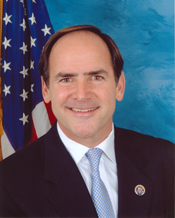
Julius W. Blackwell (born c. 1797; death date unknown) was an American politician and member of the United States House of Representatives who represented the fourth and third congressional districts of Tennessee. A Democrat, he served two nonconsecutive terms in Congress during a formative period in the nation’s political development, participating in the legislative process and representing the interests of his Tennessee constituents.
Blackwell was born in Virginia around 1797. Details of his family background and early childhood are not documented, but he attended the public schools, receiving the basic education that was typical for many young men of his time and region. At some point as a young adult, he left Virginia and moved westward to Tennessee, part of the broader migration into the developing states of the Old Southwest in the early nineteenth century.
After relocating to Tennessee, Blackwell settled in Athens, in McMinn County. There he established himself as a coppersmith by trade, a skilled occupation that would have placed him among the artisan class in a growing community. Like many white Southern men of his era who accumulated some measure of property and status, he owned slaves, a fact that situates him within the slaveholding society and economy of antebellum Tennessee. He married a woman named Mahala D., though further details of his family life, including any children, are not recorded in surviving standard biographical references.
Blackwell entered public life as a member of the Democratic Party, which at the time was the dominant political force in Tennessee and much of the South. He was first elected as a Democrat from Tennessee’s fourth congressional district to the Twenty-sixth Congress, serving from March 4, 1839, to March 3, 1841. During this initial term in the U.S. House of Representatives, he contributed to the legislative process at a time when the nation was grappling with issues such as economic recovery following the Panic of 1837, debates over federal power, and the evolving party system. He sought to continue his service but was an unsuccessful candidate for re-election to the Twenty-seventh Congress in 1840.
Following the 1840 census and subsequent reapportionment, Tennessee’s congressional districts were reduced in number and their boundaries were altered. Under this new arrangement, Blackwell successfully returned to Congress, this time representing Tennessee’s third congressional district in the Twenty-eighth Congress, serving from March 4, 1843, to March 3, 1845. Again serving as a Democrat, he participated in national deliberations during a period marked by growing sectional tensions and discussions over territorial expansion. He ran for another term but was an unsuccessful candidate for re-election to the Twenty-ninth Congress in 1844, bringing his congressional career to a close after two separated terms in office.
Little is known about Blackwell’s activities after he left Congress. The historical record does not clearly document whether he resumed his trade as a coppersmith in Athens, remained active in local or state politics, or pursued other business or civic endeavors. The date and location of his death are unknown, as is the place of his interment. Despite these gaps in the record, Julius W. Blackwell’s service in the Twenty-sixth and Twenty-eighth Congresses places him among the antebellum representatives who helped shape the legislative landscape of Tennessee and the United States in the decades preceding the Civil War.
Congressional Record