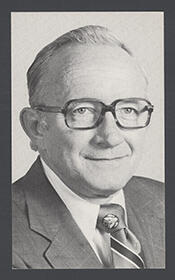
Josiah Crudup (January 13, 1791 – May 20, 1872) was a U.S. Congressman from North Carolina who served one term in the House of Representatives between 1821 and 1823. He was born in Wakelon, in Wake County, North Carolina, the son of Elizabeth (Battle) Crudup and Josiah Crudup, a Baptist minister. Raised in a religious household in the eastern Piedmont region of the state, he grew up in an agrarian setting that would shape both his later vocation as a farmer and his long association with the Baptist ministry.
Crudup received his early education at a private school in Louisburg, North Carolina, a local center of learning in the early nineteenth century. He later attended Columbian College in Washington, D.C., an institution that would eventually become George Washington University. At Columbian College he pursued theological studies, preparing for the ministry at a time when formal religious training was becoming increasingly important among Protestant denominations in the United States. Upon completion of his studies, he was ordained as a Baptist minister, a calling that he continued to exercise throughout his life.
Alongside his ministerial work, Crudup became a farmer and slave owner in North Carolina. His agricultural operations relied on enslaved labor, and federal census records document the scale of his involvement in slavery. In the 1850 United States Federal Census Slave Schedule, he is listed as enslaving 52 men, women, and children; by 1860, according to the United States Federal Census Slave Schedule, that number had increased to 64. These records place him among the larger slaveholders in his community and underscore the extent to which his livelihood was tied to the antebellum slave economy.
Crudup first entered public life through state politics. In 1820, he was elected to the North Carolina Senate from Wake County. His tenure was cut short, however, when he was compelled to vacate his seat because the North Carolina Constitution then in force prohibited “a minister of the Gospel, while exercising his ministerial functions, to hold a public office.” This constitutional restriction reflected contemporary concerns about the separation of religious and civil authority and directly affected Crudup’s early political career, forcing him to choose between his clerical role and elective office.
Despite this setback at the state level, Crudup soon moved onto the national stage. In 1821, he was elected to the Seventeenth United States Congress as a representative from North Carolina and served one term, from March 4, 1821, to March 3, 1823. During his time in Congress, he sat in the House of Representatives at a period marked by debates over internal improvements, westward expansion, and the balance between free and slave states in the Union. In 1822 he sought reelection but was narrowly defeated by Willie P. Mangum, a rising North Carolina politician who would later serve in the United States Senate. Following this defeat, Crudup returned to his primary occupations of farming and the Baptist ministry.
Crudup remained active in public affairs in North Carolina after leaving Congress. By the mid-1830s he had relocated his political base to Granville County, and in 1835 he served as a delegate from Granville County to the North Carolina Constitutional Convention. That convention undertook significant revisions of the state constitution, including changes to representation and suffrage, and addressed longstanding issues such as the relationship between church and state that had earlier affected Crudup’s own eligibility for office. His participation in the convention reflected his continued engagement with the political and constitutional development of his state.
In his later years, Crudup continued to live in what became Vance County, near Kittrell, North Carolina, where he combined his ministerial duties with the management of his farm. He lived through the Civil War and the abolition of slavery, witnessing the collapse of the slave-based agricultural system on which his own wealth had been built. Josiah Crudup died in Kittrell on May 20, 1872. He was buried in the Crudup family cemetery near Kittrell, in the region where he had spent much of his life. Among his descendants is the actor Billy Crudup, linking the nineteenth-century clergyman and politician to a later generation of American public figures.
Congressional Record