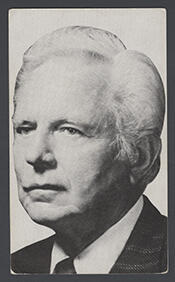
Joshua Mathiot (April 4, 1800 – July 30, 1849) was a U.S. Representative from Ohio and an attorney and local official whose career reflected the political and reform currents of the early nineteenth century. He was born on April 4, 1800, in Connellsville, Fayette County, Pennsylvania, a community situated in the western part of the state during a period of rapid frontier expansion and development. Little is recorded about his parents or early family life, but his subsequent professional path suggests that he received sufficient early education to prepare him for the study of law.
Mathiot pursued legal studies as a young man, following the customary route of reading law rather than attending a formal law school, which was typical in the United States during this era. After completing his legal training, he was admitted to the bar and commenced the practice of law. Around 1830 he moved to Newark, Ohio, a growing town in Licking County, where he established himself as an attorney. His relocation to Ohio placed him in a state that was emerging as a significant political and economic center in the Old Northwest, and Newark became the base of his professional and public life.
In Newark, Mathiot quickly became active in local legal and civic affairs. He built a law practice and gained sufficient standing in the community to be appointed prosecuting attorney of Licking County, a position he held from 1832 to 1836. In this role he was responsible for representing the state in criminal proceedings, a post that required both legal skill and public trust. His prominence in local affairs was further underscored by his election as mayor of Newark in 1834, indicating the confidence of his fellow citizens in his leadership and administrative abilities during a period of municipal growth and institutional development.
Mathiot’s local reputation and alignment with the emerging Whig Party led to his election to national office. He was elected as a Whig to the Twenty-seventh Congress and served as a U.S. Representative from Ohio from March 4, 1841, to March 3, 1843. His term coincided with a turbulent period in national politics, including the presidency of William Henry Harrison and the early administration of John Tyler, when issues such as the national bank, federal internal improvements, and economic recovery from the Panic of 1837 were central to congressional debate. Although detailed records of his specific legislative initiatives are limited, his service placed him among the Whig legislators advocating for a stronger role for Congress and federal support for economic development.
After the conclusion of his congressional term, Mathiot returned to Ohio and resumed his legal and civic activities in Newark. In addition to his professional work, he became prominently involved in the temperance movement, which was gaining strength across the United States in the 1840s. He served as Grand Worthy Patriarch of the Sons of Temperance in Ohio, a leading position in one of the era’s most influential fraternal and reform organizations dedicated to promoting abstinence from alcoholic beverages. This role reflected both his moral convictions and his engagement with broader social reform efforts of the time.
Mathiot’s later years were marked by his continued participation in temperance advocacy. While attending a temperance convention at Sandusky, Ohio, in the summer of 1849, he contracted cholera during one of the periodic epidemics that afflicted the United States in the mid-nineteenth century. He returned to Newark, where he died from the disease on July 30, 1849. Joshua Mathiot was interred in Cedar Hill Cemetery in Newark, Ohio, where his burial marked the close of a career that spanned local legal service, municipal leadership, national legislative office, and active participation in one of the major reform movements of his era.
Congressional Record