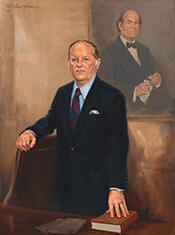
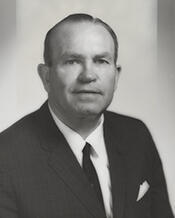
Joseph Addison Woodward (April 11, 1806 – August 3, 1885) was an American lawyer, slaveholding planter, and Democratic politician who served as a U.S. Representative from South Carolina in the mid-nineteenth century. He was the son of William Woodward and was born in Winnsboro, Fairfield District, South Carolina, on April 11, 1806, into a family rooted in the political and social life of the state. Little is recorded about his early childhood, but his upbringing in the antebellum South and his family’s status positioned him to enter the legal profession and public affairs at a relatively young age.
Woodward received an academic education in South Carolina and pursued higher studies at the institution that would later become the University of South Carolina in Columbia. He graduated from the University of South Carolina at Columbia after completing a classical curriculum typical of the period, which emphasized rhetoric, law, and the liberal arts. Following his graduation, he studied law, was admitted to the bar, and commenced the practice of law in South Carolina. His legal training and professional work provided the foundation for his subsequent entry into state and national politics.
Woodward’s political career began in the South Carolina House of Representatives, where he served as a member during two separate periods. He first held a seat in the State house of representatives from 1834 to 1835, representing his constituency during a time when South Carolina was deeply engaged in debates over states’ rights and the nature of the federal Union. He returned to the state legislature for a second term from 1840 to 1841, continuing to build his reputation as a Democratic politician aligned with the interests of the planter class and the defense of slavery as an institution.
In 1843, Woodward advanced to national office when he was elected as a Democrat to the Twenty-eighth Congress. He was subsequently reelected to the four succeeding Congresses, serving continuously in the U.S. House of Representatives from March 4, 1843, to March 3, 1853. His decade-long tenure in Congress coincided with a period of significant national expansion and sectional tension, including the annexation of Texas, the Mexican–American War, and the debates leading to the Compromise of 1850. As a South Carolina Democrat and slave owner, Woodward was identified with the pro-slavery, states’ rights wing of his party, although specific details of his committee assignments and floor activity are sparsely documented. After five consecutive terms, he declined to be a candidate for reelection in 1852 to the Thirty-third Congress, thereby concluding his service in the national legislature at the close of the Thirty-second Congress in March 1853.
Following his departure from Congress, Woodward left South Carolina and relocated to Alabama, where he resumed the practice of law. He settled in Talladega, Alabama, a growing community in the eastern part of the state, and continued his legal career there. Like many Southern political figures of his generation, he had been a slave owner, and his social and economic position remained tied to the antebellum Southern order. Although the historical record provides limited detail on his activities during and after the Civil War, he appears to have lived a relatively private life in his later years, engaged primarily in legal and local affairs rather than returning to high public office.
Joseph Addison Woodward died in Talladega, Alabama, on August 3, 1885. He was interred in Oak Hill Cemetery in Talladega, where his grave marks the resting place of a long-serving antebellum congressman whose career reflected the politics and priorities of South Carolina and the broader South in the decades leading up to the Civil War.
Congressional Record