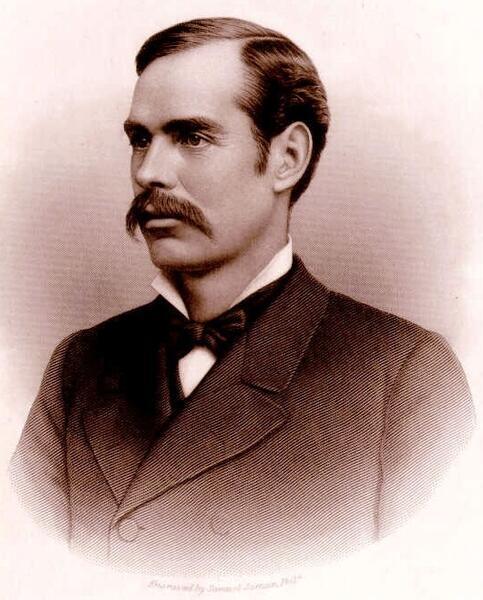
Joseph Earlston Thropp (October 4, 1847 – July 27, 1927) was a Republican member of the U.S. House of Representatives from Pennsylvania. As a member of the Republican Party representing Pennsylvania, he contributed to the legislative process during one term in office, serving during a significant period in American history and participating in the democratic process on behalf of his constituents.
Thropp was born on October 4, 1847, in Valley Forge, Pennsylvania. He was educated in the public schools and later attended Friends Central High School in Philadelphia, Pennsylvania. Demonstrating an early aptitude for technical studies, he pursued higher education in engineering and graduated as a civil engineer from the Polytechnic College of Pennsylvania in 1868, entering adulthood with professional training suited to the rapid industrial and infrastructural expansion of the post–Civil War era.
Following his graduation, Thropp went to the Middle Northwest and engaged in his profession as a civil engineer. He was involved in the construction of docks at Duluth, Minnesota, and Fond du Lac, Wisconsin, important developing centers of commerce and transportation in the late nineteenth century. In the course of this work, he advanced to the position of railroad division engineer, gaining experience in large-scale infrastructure projects and the management of complex engineering operations.
In 1870, Thropp returned to Pennsylvania and settled in Conshohocken, where he shifted his career from engineering to industry. There he engaged in the manufacture of pig iron, participating in one of the key industries that underpinned the region’s economic growth. Building on his experience and success in iron manufacturing, he subsequently became the owner of the Earlston Furnaces in Everett, Pennsylvania, in 1888. His role as an industrialist placed him among the business leaders of his time and provided the economic and civic standing that would later support his entry into public life.
Thropp was elected as a Republican to the Fifty-sixth Congress, representing Pennsylvania in the U.S. House of Representatives. His term in Congress constituted one full term in office, during which he took part in the legislative work of the national government at a time marked by industrial expansion, economic change, and evolving national policy. Although he sought to continue his service, he was an unsuccessful candidate for reelection in 1900, bringing his formal congressional career to a close after that single term.
After leaving Congress, Thropp retired from active business pursuits. He divided his later years between Washington, D.C., and Miami, Florida, maintaining residences in both places as he withdrew from the day-to-day responsibilities of industry and public office. He died on July 27, 1927, while on a visit to Quebec, Canada. His remains were returned to Pennsylvania, and he was interred in West Laurel Hill Cemetery in Bala Cynwyd, Pennsylvania, closing the life of an engineer, industrialist, and one-term Republican representative who had been closely tied to the industrial development of his home state.
Congressional Record