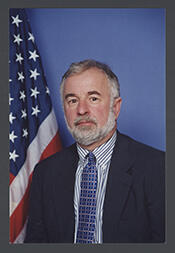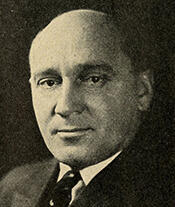
Joseph Lawrence Pfeifer (February 6, 1892 – April 19, 1974) was an American physician and Democratic politician who served as a member of the United States House of Representatives for New York’s 8th congressional district from 1935 to 1951. Over the course of eight consecutive terms in Congress, he represented his Brooklyn constituents during a period marked by the Great Depression, World War II, and the early Cold War, contributing to the legislative process as a member of the House of Representatives.
Pfeifer was born in Brooklyn, New York, on February 6, 1892. He was educated in local Catholic institutions, attending St. Nicholas Parochial School and St. Leonard’s Academy before continuing his studies at St. Francis College in Brooklyn. He then pursued medical training at the Long Island College of Medicine, from which he graduated in 1914. That same year he was licensed to practice medicine, beginning a professional career that would precede and later accompany his work in public office.
Before entering elective politics, Pfeifer established himself as a practicing physician and medical educator. He became known as a lecturer and author on surgical topics, contributing to the professional development of other physicians. During World War I, he served on a medical advisory board, where he was involved in instructing medical officers preparing to go overseas. This combination of clinical practice, teaching, and wartime advisory service helped shape his public profile in Brooklyn and provided him with experience in administration and public service that would inform his later legislative work.
Pfeifer was elected as a Democrat to the Seventy-fourth Congress and to the seven succeeding Congresses, serving from January 3, 1935, to January 3, 1951. His tenure in the House of Representatives spanned the New Deal era, World War II, and the immediate postwar years, and he participated actively in the democratic process on behalf of his district. As a member of Congress, he represented the interests of his New York constituents while engaging with national and international issues that came before the House. A confidential 1943 analysis of the House Foreign Affairs Committee by Isaiah Berlin for the British Foreign, Commonwealth and Development Office characterized Pfeifer as having a mixed record on foreign policy: he dissented on lifting the arms embargo, on neutrality revision, on the extension of conscription, and on lifting belligerent zones. However, on other major foreign policy issues—such as conscription more broadly, the Lend-Lease program and its appropriations, and the repeal of the ban on arming United States ships—he supported the Roosevelt Administration. Berlin described him at age fifty-one as an “internationalist,” reflecting his general orientation toward engagement in world affairs despite specific disagreements.
After eight terms in office, Pfeifer sought renomination in 1950 to the Eighty-second Congress but was unsuccessful. With the conclusion of his congressional service in January 1951, he returned to his original profession and resumed the practice of medicine. In this post-congressional phase of his career, he continued to reside in Brooklyn, maintaining his longstanding ties to the community that had formed the base of both his medical and political life.
Pfeifer retired from active professional life in his later years and remained in Brooklyn until his death. He died there on April 19, 1974. He was interred in St. John’s Cemetery in Middle Village, New York, closing a life that combined medical service, wartime advisory work, and sixteen years of representation in the United States House of Representatives.
Congressional Record