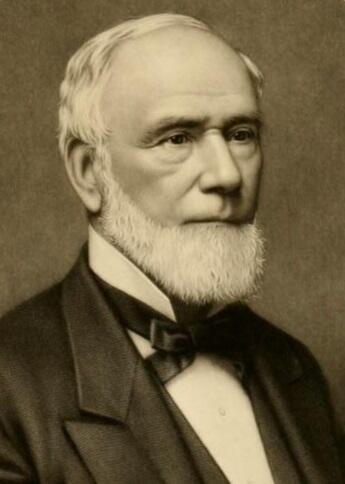
Joseph Mullin (August 6, 1811 – May 17, 1882) was an American lawyer and politician from New York. As a member of the Whig Party representing New York, he contributed to the legislative process during one term in office. His service in Congress occurred during a significant period in American history, in the decades leading up to the Civil War, when issues of economic development, sectional tension, and party realignment were reshaping national politics. Throughout his public life, Mullin participated in the democratic process and represented the interests of his constituents within this evolving political landscape.
Born on August 6, 1811, Mullin came of age in the early nineteenth century, a time when New York was rapidly expanding in population, commerce, and political influence. Details of his early childhood and family background are sparse in the surviving record, but his subsequent professional achievements indicate that he received a solid education for the period and was drawn early to the study of law and public affairs. Growing up in New York during an era of canal building, westward migration, and the rise of new political movements likely exposed him to the practical workings of government and the law, shaping his later decision to pursue a legal and political career.
Mullin studied law in New York and was admitted to the bar, establishing himself as an attorney in the state. As an American lawyer, he built a professional practice that would serve as the foundation for his later public service. The legal profession in New York during this period demanded familiarity with rapidly changing commercial and property law, and Mullin’s work as a lawyer would have brought him into contact with a broad range of clients and local officials. His legal training and experience not only provided him with a livelihood but also prepared him for legislative responsibilities, where knowledge of statutes, procedure, and constitutional principles was essential.
From this legal background, Mullin entered politics as a member of the Whig Party, which, in New York and nationally, advocated for internal improvements, a strong legislative role in economic development, and a cautious approach to the expansion of slavery. Elected to represent New York in the United States Congress, he served one term, participating directly in the federal legislative process. During his time in the House of Representatives, he took part in debates and votes on issues of pressing concern to his state and the nation, including questions of infrastructure, trade, and the balance of power between free and slave states. As a Whig congressman, he aligned himself with a party that sought to promote economic modernization while navigating the increasingly contentious politics of the antebellum era.
Mullin’s congressional service placed him among the ranks of New York representatives who helped articulate the interests of a growing and diverse state. Representing his constituents, he contributed to the formulation of national policy at a time when New York’s commercial and political weight was rising. His single term in Congress reflected both the volatility of party politics in the 1840s and 1850s and the challenges faced by Whig politicians as the party confronted internal divisions and external pressures that would eventually lead to its dissolution. Even within this relatively brief tenure, Mullin’s role as a legislator underscored the importance of legal expertise and regional advocacy in the workings of the national government.
After his service in Congress, Mullin returned to his legal and civic pursuits in New York. Like many nineteenth-century lawyer-politicians, he continued to be engaged in public life through his profession, local affairs, and party activity, drawing on the experience he had gained at the national level. His later years were spent in the state whose interests he had represented in Washington, and he remained part of the legal and political community that had shaped his career. Joseph Mullin died on May 17, 1882, closing a life that bridged the formative decades of the American republic’s expansion and sectional conflict. He is buried in New York, where his career as an attorney and Whig congressman formed part of the broader story of the state’s and the nation’s nineteenth-century development.
Congressional Record