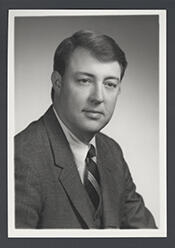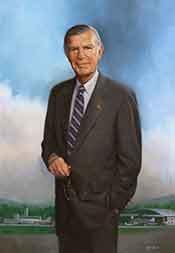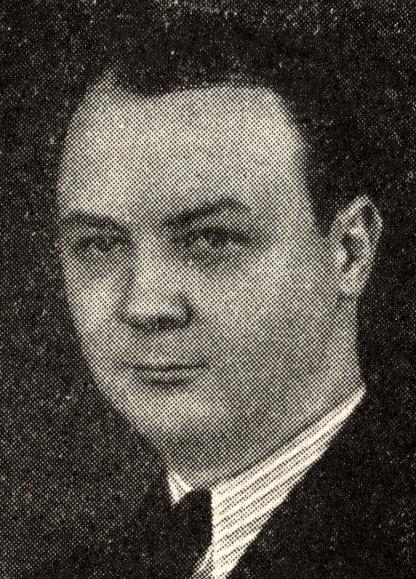
Joseph A. McArdle (June 29, 1903 – December 27, 1967) was a Democratic member of the U.S. House of Representatives from Pennsylvania. He served two terms in Congress during a significant period in American history, contributing to the legislative process and representing the interests of his constituents as a member of the Democratic Party.
McArdle was born in Muncie, Indiana, on June 29, 1903. In 1905, he moved with his parents to Pittsburgh, Pennsylvania, when his father, Peter J. “P.J.” McArdle, was elected president of the Amalgamated Association of Iron and Steel Workers, a major labor organization in the steel industry. The family settled in Pittsburgh’s Mount Washington neighborhood, and Joseph McArdle grew up in a household deeply involved in organized labor and municipal politics. His father went on to have a long career in local government, serving on the Pittsburgh City Council from 1911 to 1913, 1916 to 1919, 1922 to 1930, and again from 1932 to 1940, a record that helped shape Joseph McArdle’s own interest in public service and political life.
Before entering national politics, McArdle established himself in state and local affairs. He was elected to the Pennsylvania House of Representatives and served there from 1936 to 1938. In the state legislature he was part of the Democratic ascendancy that accompanied the New Deal era, representing the interests of his Pittsburgh-area constituents at a time when industrial labor, economic recovery, and social welfare legislation were central political concerns. His work in Harrisburg provided him with legislative experience and a political base that would support his move to the national stage.
In 1938, McArdle was elected as a Democrat to the Seventy-sixth Congress and was subsequently reelected to the Seventy-seventh Congress, representing Pennsylvania in the U.S. House of Representatives. His congressional service, encompassing two terms, placed him in Washington during a critical period marked by the final years of the Great Depression and the early stages of World War II. As a Democratic member of Congress, he participated in the federal legislative process, contributing to debates and votes on domestic and foreign policy issues that affected both his industrial hometown and the nation at large. He served in the House until his resignation on January 5, 1942.
McArdle resigned from Congress in early 1942 to return to municipal politics as a member of the Pittsburgh City Council, following in the footsteps of his father. He served on the council from 1942 until 1949, a period that spanned the wartime and immediate postwar years, when Pittsburgh was undergoing significant industrial, demographic, and infrastructural changes. On the council he was involved in addressing local concerns such as urban services, labor and industry relations, and the challenges of a rapidly evolving urban environment in a major steel-producing city.
In 1949, after more than a decade of service as a Democratic officeholder, McArdle switched his party affiliation and became a Republican. He subsequently became active in Republican Party organization at the state level. From early 1950 until 1966, he served as the state GOP committeeman from Mount Washington, Pennsylvania. In that role he helped shape party strategy and candidate support in his district over a period that saw significant political realignments in both Pennsylvania and the nation, particularly in urban and working-class communities where party loyalties were in flux.
Joseph A. McArdle’s family remained notable in American public life beyond his own career. His grandson is the actor Zachary Quinto, and the McArdle family story—focusing especially on his father, P.J. McArdle, and the family’s roots in labor and local politics—was featured on the 2022 series finale of the NBC television series “Who Do You Think You Are?” This later attention highlighted the multigenerational impact of the family’s involvement in public affairs.
McArdle died at the age of sixty-four on December 27, 1967. He was interred at the Roman Catholic Calvary Cemetery in Pittsburgh, Pennsylvania, reflecting his lifelong ties to the city where he had grown up, built his political career, and represented both locally and nationally.
Congressional Record