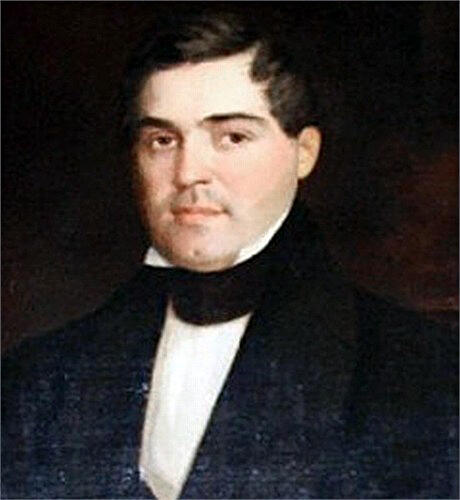
Joseph Henry Kuhns (September 1800 – November 16, 1883) was a Whig member of the U.S. House of Representatives from Pennsylvania. Serving a single term in Congress, he participated in the national legislative process during a formative period in American political and economic development, representing the interests of his Pennsylvania constituents within the framework of the Whig Party’s program.
Born in September 1800, Kuhns came of age in the early years of the nineteenth century, a time marked by rapid territorial expansion and evolving party politics in the United States. Although detailed records of his early life and family background are sparse, his later professional and political career indicates that he benefited from the educational and civic opportunities available to ambitious young men in Pennsylvania during this era. His formative years would have coincided with the rise of organized political parties and the early debates over internal improvements and federal power that later defined much of the Whig agenda.
Kuhns pursued the study of law and entered the legal profession, a common pathway to public life in the nineteenth century. Through his legal work, he became familiar with the economic and social concerns of his community, experience that helped shape his political views and prepared him for elective office. As a lawyer, he would have been engaged with questions of property, commerce, and local governance, all of which were central issues in Pennsylvania’s development during his lifetime.
Aligning himself with the Whig Party, Kuhns embraced a political organization that advocated for a strong but constitutionally limited national government, support for internal improvements such as roads and canals, and policies favorable to economic development and commerce. As a member of the Whig Party representing Pennsylvania, Joseph Henry Kuhns contributed to the legislative process during one term in office. His service in Congress occurred during a significant period in American history, when questions of economic policy, westward expansion, and the balance of power between free and slave states were increasingly prominent in national debate.
During his term in the U.S. House of Representatives, Kuhns participated in the democratic process and represented the interests of his constituents, bringing the concerns of his district into the broader national discussion. While specific committee assignments and sponsored measures are not extensively documented, his role as a Whig congressman placed him within the coalition that sought to promote economic modernization and a more active federal role in fostering national growth. His single term reflected both the competitive nature of mid-nineteenth-century politics in Pennsylvania and the shifting fortunes of the Whig Party in the years leading up to the Civil War.
After concluding his service in Congress, Kuhns returned to private life, resuming his professional and civic activities in Pennsylvania. Like many one-term representatives of his era, he continued to be part of the political and social fabric of his community even after leaving national office, drawing on his experience in Washington to inform his work at the local and state level. His later years unfolded against the backdrop of the nation’s deepening sectional crisis, the Civil War, and Reconstruction, events that transformed the political landscape in which he had once served.
Joseph Henry Kuhns died on November 16, 1883, closing a life that spanned from the early republic through the post–Civil War era. Remembered as a Whig member of the U.S. House of Representatives from Pennsylvania, his career illustrates the trajectory of many nineteenth-century American lawyers who moved between the courtroom and the halls of Congress, contributing to the legislative process during a period of profound national change.
Congressional Record