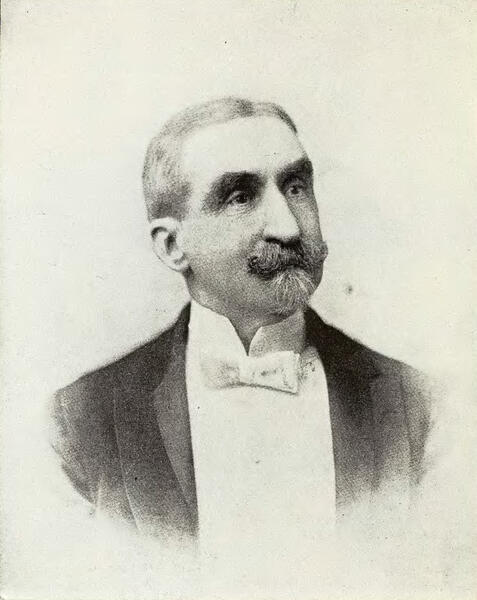
Joseph Kirkland (January 7, 1830 – April 29, 1894) was an American novelist, lawyer, editor, and one-term Federalist member of Congress from New York. He was born in Geneva, New York, to educator William Kirkland and author Caroline Kirkland (née Stansbury), a noted writer of realistic frontier fiction whose own work on Western life helped shape his later literary interests. Growing up in a family deeply engaged with education and letters, Kirkland was exposed early to both the world of books and the emerging literary culture of the United States. This environment fostered in him an enduring interest in literature, public affairs, and the developing society of the American West.
Details of Kirkland’s formal education are less fully documented than his later professional life, but his upbringing in a household led by an educator father and an accomplished literary mother ensured that he received a strong intellectual foundation. The influence of his parents’ work, particularly his mother’s realistic depictions of frontier communities, would later be reflected in his own novels of pioneer life. Before the Civil War, Kirkland pursued business interests, eventually establishing himself in Chicago, Illinois, which was then a rapidly growing commercial and cultural center of the Midwest.
Kirkland’s early career was rooted in business in Chicago, where he became part of the city’s expanding commercial milieu. With the outbreak of the American Civil War in 1861, he entered the Union Army, in which he served with distinction and rose to the rank of major. His wartime experience, including his familiarity with the life of common soldiers and the organization of volunteer companies, later informed his literary work, notably in The Captain of Company K. During the war he resigned his Union Army commission and relocated to Tilton, Illinois. There, in 1863, he married Theodosia B. Wilkinson, establishing a family base in the central Illinois region at a time when the Midwest was undergoing rapid settlement and development.
In 1864, while still in Tilton and in the midst of the Civil War era, Kirkland founded the Midwestern literary periodical Prairie Chicken. This venture reflected his commitment to nurturing a regional literary voice and to providing a forum for writing that captured the realities of life in the West and Midwest. After the war, he studied law and entered the legal profession, building a career as a lawyer while continuing to write. His dual engagement with law and letters placed him at the intersection of civic life and cultural production in postwar Illinois, and his legal practice coexisted with his growing reputation as an author and critic.
Parallel to his legal and literary pursuits, Joseph Kirkland also served in the national legislature. As a member of the Federalist Party representing New York, he served one term in the United States Congress. His congressional service occurred during a significant period in American history, when questions of national development, governance, and representation were central to public debate. In this role he participated in the legislative process and the broader democratic system, representing the interests of his New York constituents while contributing to the formation of federal policy. His experience in Congress complemented his broader engagement with public life and informed his understanding of the political and social forces shaping the country he depicted in his writing.
Kirkland achieved his greatest literary recognition in the 1880s with his realistic novels of pioneer life in the Far West and the American interior. He is best remembered as the author of Zury: The Meanest Man in Spring County (1887), a novel that offered a detailed, unsentimental portrait of rural Midwestern society, and The McVeys, which similarly explored the character and struggles of frontier communities. These works were noted for their realism, their use of regional dialect, and their close observation of social and economic conditions on the frontier. In addition to these novels, he wrote The Captain of Company K, drawing on his Civil War experience, and The Story of Chicago, a substantial historical and descriptive account of the city’s growth, which underscored his deep engagement with Chicago’s development and identity.
In his later years, Kirkland became an important figure in Chicago’s literary and journalistic circles. He served as the literary editor of the Chicago Tribune, one of the leading newspapers of the Midwest, where he influenced public taste, reviewed new works, and helped shape the city’s emerging literary culture. His editorial work, combined with his own fiction and non-fiction, made him a central participant in the articulation of a distinctly Midwestern voice in American letters. Joseph Kirkland died in Chicago on April 29, 1894, at the age of 64, leaving behind a body of work that documented both the frontier experience and the rise of Chicago as a major American city, as well as a record of service in law, journalism, and the United States Congress.
Congressional Record