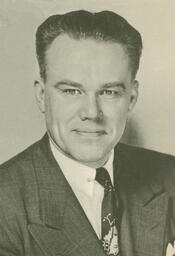
Joseph Kille (April 12, 1790 – March 1, 1865) was an American politician who served a single term in the United States House of Representatives, representing the at-large congressional district of New Jersey from 1839 to 1841 as a Democrat in the 26th United States Congress. A member of the Democratic Party, he participated in the legislative process during a significant period in American history, representing the interests of his New Jersey constituents at both the state and national levels. Over the course of his public career, he also held multiple county offices and served in the New Jersey General Assembly both before and after his tenure in Congress.
Kille was born near Bridgeport, New Jersey, on April 12, 1790. He pursued his early education in nearby Salem, New Jersey, a regional center of commerce and public life in southern New Jersey during the early nineteenth century. His upbringing and schooling in Salem County placed him within the local civic and political networks that would shape his later career in public service.
Kille entered public life at a relatively young age. He first served in the New Jersey General Assembly from 1815 to 1816, representing his community in the state legislature. This early legislative experience introduced him to the workings of state government and aligned him with the Democratic political currents of the era, then associated with the broader Jeffersonian and Jacksonian traditions that emphasized states’ rights and popular democracy.
In addition to his legislative work, Kille held important county offices in Salem County. He served as sheriff of Salem County from 1822 to 1829, a position that carried responsibility for law enforcement, the execution of court orders, and the administration of county jails. Immediately following his term as sheriff, he became county clerk of Salem County, serving from 1829 to 1839. As county clerk, he oversaw the recording of deeds, court records, and other official documents, further entrenching his role in local governance and public administration.
Kille’s decade of service as county clerk preceded his election to the United States House of Representatives. Elected as a Democrat to the 26th United States Congress, he represented New Jersey’s at-large congressional district from March 4, 1839, to March 3, 1841. During this single term in Congress, he served at a time marked by national debates over economic policy, the aftermath of the Panic of 1837, and ongoing disputes over federal and state authority. As a Democratic representative, he contributed to the legislative process and participated in the democratic governance of the nation, acting on behalf of the citizens of New Jersey in the House of Representatives.
After leaving Congress at the conclusion of his term in 1841, Kille returned to state politics. He reentered the New Jersey General Assembly in 1856, resuming his role as a state legislator more than four decades after his first service in that body. His return to the Assembly underscored his continued engagement in public affairs and his enduring connection to the political life of New Jersey.
Joseph Kille died in Salem, New Jersey, on March 1, 1865, at the age of 74. He was interred in St. John’s Episcopal Cemetery in Salem. His career, spanning local, county, state, and national offices, reflected the trajectory of a nineteenth-century public servant whose work linked the civic institutions of his home county with the broader political developments of his state and the United States.
Congressional Record