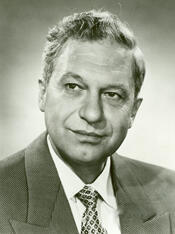
Joseph Ketchum Edgerton (February 16, 1818 – August 25, 1893) was an American lawyer, railroad executive, and Democratic politician who served one term as a U.S. Representative from Indiana from 1863 to 1865. His congressional service took place during the Civil War, a significant period in American history, during which he participated in the legislative process and represented the interests of his Indiana constituents.
Edgerton was born in Vergennes, Vermont, on February 16, 1818. During his youth his family moved to northern New York, and he attended the public schools of Clinton County, New York. He pursued further studies at Plattsburgh Academy, an important regional educational institution that his older brother, Alfred Peck Edgerton, had also attended. After completing his formal schooling, Joseph Edgerton read law with an established firm, following the then-common practice of legal apprenticeship, and was subsequently admitted to the bar.
In 1839 Edgerton commenced the practice of law in New York City, building his early professional career in the nation’s principal commercial center. Seeking new opportunities in the developing Midwest, he moved in 1844 to Fort Wayne, Indiana, where he continued to practice law. Fort Wayne was emerging as a transportation and commercial hub, and Edgerton’s legal work and business interests increasingly intersected with the region’s expanding infrastructure and economic development.
Edgerton soon became deeply involved in railroad enterprises that were critical to the growth of the Midwest. In 1854 he became a member of the board of directors of the Fort Wayne and Chicago Railroad and was later selected as its president. He also served as president of the Grand Rapids and Indiana Railroad and of the Ohio Railroad. These lines were constructed to connect major cities of the Midwest, particularly the rapidly growing industrial city of Chicago, with eastern markets, facilitating the movement of natural resources and manufactured goods. Through these roles, Edgerton became a prominent figure in the transportation sector and in the broader economic development of the region.
A member of the Democratic Party, Edgerton entered national politics in the midst of the Civil War. He was elected to the United States House of Representatives in 1862 and served in the Thirty-eighth Congress from March 4, 1863, to March 3, 1865, representing Indiana. During his single term in office, he contributed to the legislative process at a time of intense national conflict and constitutional change. His vote on the Thirteenth Amendment to the United States Constitution, which abolished slavery, is recorded as “nay,” reflecting the divisions within the Democratic Party and among Northern politicians over wartime and Reconstruction-era measures. He was an unsuccessful candidate for reelection in 1864 and, after leaving Congress, returned to his legal and business interests, particularly in the railroad industry.
In his later years, Edgerton continued to be associated with the commercial and civic life of Fort Wayne while maintaining connections beyond Indiana. He died in Boston, Massachusetts, on August 25, 1893. His body was returned to Indiana, and he was interred in Lindenwood Cemetery in Fort Wayne, a resting place for many of the city’s prominent citizens. His family maintained close political and regional ties; his older brother, Alfred Peck Edgerton, served two terms in Congress representing Ohio and, after his death in 1897, was also buried in Lindenwood Cemetery, uniting the brothers in a common place of memorial.
Congressional Record