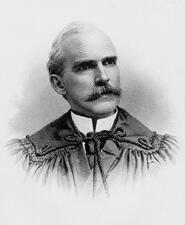
Joseph Haynsworth Earle (April 30, 1847 – May 20, 1897) was a United States senator from South Carolina and a member of the Democratic Party who served in the United States Congress in 1897. His brief tenure in the Senate occurred during a significant period in American history, as the nation continued to grapple with the political, economic, and social consequences of the Civil War and Reconstruction. As a senator, Earle participated in the legislative process and represented the interests of his South Carolina constituents during his single term in office.
Earle was born on April 30, 1847, in South Carolina, into a period marked by sectional tensions that would soon culminate in the Civil War. Growing up in the antebellum South, he came of age in an environment shaped by the plantation economy and the increasingly polarized national debate over slavery and states’ rights. These formative years in a state that would become a focal point of secession and conflict helped shape his understanding of law, governance, and the role of the federal government, perspectives that would later inform his public service.
As a young man, Earle pursued an education appropriate to someone preparing for a professional career in the postwar South. He studied law, a common path for ambitious men of his generation seeking influence in public affairs. His legal training provided him with a grounding in constitutional principles and the mechanics of government at both the state and federal levels. By entering the legal profession, he positioned himself to participate directly in the rebuilding of Southern civic and political life after the Civil War.
Earle’s legal career developed alongside the broader reconstitution of South Carolina’s political institutions in the late nineteenth century. As a practicing attorney, he gained experience in the courts and became familiar with the legal issues facing his state during Reconstruction and its aftermath, including questions of property, civil rights, and the reassertion of local control. His work in the law helped establish his reputation and provided a platform from which he could enter electoral politics as a Democrat at a time when the Democratic Party was reestablishing dominance in Southern state governments.
By the 1890s, Earle had become sufficiently prominent in South Carolina’s legal and political circles to be selected for national office. A committed Democrat, he was chosen to represent South Carolina in the United States Senate, reflecting both his personal standing and the confidence of his party in his judgment and abilities. His election to the Senate placed him in the national legislature during an era characterized by debates over tariffs, monetary policy, industrialization, and the evolving relationship between the federal government and the states.
Earle served as a senator from South Carolina in the United States Congress from 1897 to 1897, holding office during one term in that year. Although his time in the Senate was brief, he contributed to the legislative process and took part in the deliberations of a body that was addressing the challenges of a rapidly changing nation. As a member of the Senate, he participated in the democratic process and sought to represent the interests and perspectives of South Carolinians within the broader framework of federal policymaking.
Joseph Haynsworth Earle’s service in Congress was cut short by his death on May 20, 1897. His passing ended a career that had spanned the tumultuous transition of the South from the Civil War era through Reconstruction and into the late nineteenth century. Though his tenure in the United States Senate was limited to a single term in 1897, his role as a Democratic senator from South Carolina placed him among the key figures who helped shape the post-Reconstruction political order in his state and contributed to the ongoing national dialogue over governance, federalism, and economic development.
Congressional Record