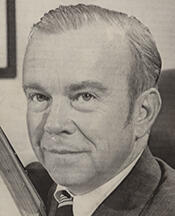
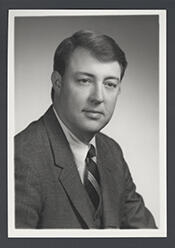
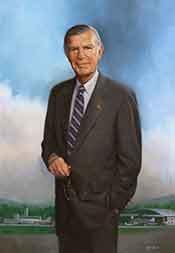
Joseph E. Casey was born on December 27, 1898, in Clinton, Worcester County, Massachusetts. He attended the public schools of Clinton and grew up in a working- and middle-class New England environment shaped by the industrial and political life of early twentieth-century Massachusetts. His early years coincided with a period of significant social and economic change in the region, which helped inform his later interest in public affairs and Democratic Party politics.
Casey pursued higher education at Boston University, where he studied law. After completing his legal studies, he was admitted to the bar and commenced the practice of law in Clinton, Massachusetts. His legal career provided him with a foundation in public policy and legislative issues, and he became active in local Democratic politics. Through his work as an attorney and party activist, he built a reputation that would soon carry him into national office.
Joseph E. Casey entered national politics as a member of the Democratic Party and was elected to the United States House of Representatives from Massachusetts. He served as a U.S. Congressman from Massachusetts during the mid-twentieth century, a period marked by the Great Depression, the New Deal, and World War II. In Congress, he represented his Massachusetts district in the House of Representatives, participating in legislative debates and votes on domestic economic recovery, wartime measures, and postwar policy. His service placed him among the influential Democratic lawmakers of his era, and he was involved in the broad legislative agenda that reshaped federal involvement in economic and social life during and after the 1930s.
After leaving Congress, Casey returned to the practice of law and remained engaged in public and civic affairs. He continued to be identified with Democratic politics in Massachusetts and maintained his professional activities in the legal field. Over the course of his later life, he divided his time between his legal work and various public engagements, drawing on his experience as a former member of Congress. Joseph E. Casey died on September 1, 1980, in Washington, D.C., closing a long career that linked local legal practice with national legislative service.
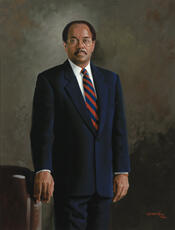
Joseph H. Casey was born on April 3, 1918, in Halifax, Nova Scotia, Canada. He was raised in Nova Scotia and educated in the province’s public schools, coming of age during the Great Depression and the Second World War, developments that shaped the political and economic context in which he would later serve. His early life in Halifax and elsewhere in Nova Scotia acquainted him with the concerns of maritime communities, including trade, fisheries, and regional development.
Casey entered public life as a member of the Nova Scotia Liberal Party. He was elected to the Nova Scotia House of Assembly, where he served as a provincial legislator. In that capacity, he represented his constituency in the legislature and took part in debates over provincial policy, including economic development, infrastructure, and social services. His work in the House of Assembly placed him among the notable Nova Scotia politicians of the mid- to late twentieth century, and he contributed to the governance of the province during a period of modernization and changing federal–provincial relations in Canada.
In addition to his legislative duties, Joseph H. Casey was active in local and regional political affairs, working with party organizations and community groups. His career reflected the traditional role of provincial legislators in Canada, balancing constituency service with participation in broader policy discussions. He remained a figure in Nova Scotia public life over several decades, associated with Liberal politics and the evolving governance of the province. Joseph H. Casey died on February 16, 2010, leaving a record of service in the Nova Scotia legislature and in provincial political life.
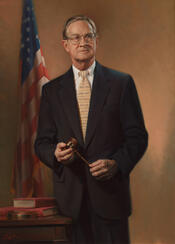
Joseph M. Casey was born in 1827, in the state of New York. He moved west in the mid-nineteenth century, part of the broader migration into the developing states of the American Midwest. Settling in Iowa, he became involved in local affairs as the region transitioned from frontier communities to more established towns and counties. His early adult life coincided with the rapid growth of Iowa and the intensifying national debates over slavery, statehood, and the future of the Union.
Casey entered politics in Iowa and served as a member of the Iowa state legislature. As an Iowa state legislator, he participated in the governance of a young and growing state, addressing issues such as transportation, agriculture, land policy, and the legal framework of state institutions. His legislative service took place against the backdrop of the Civil War and Reconstruction eras, when questions of federal–state relations and economic development were central to state policymaking. Through his work in the legislature, he contributed to the shaping of Iowa’s laws and public policies during a formative period in its history. Joseph M. Casey died in 1895, having been part of the generation that guided Iowa from its early statehood into a more mature political and economic order.
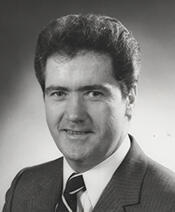
Joseph Casey, a nineteenth-century American politician from Pennsylvania, was born on December 17, 1814, in Ringgold, Washington County, Pennsylvania. He grew up in southwestern Pennsylvania and pursued an education in the common schools before studying law. After reading law in the customary manner of the period, he was admitted to the bar and began practicing as an attorney in Pennsylvania. His legal work, conducted in a region important to early American industry and transportation, led naturally into public service and political involvement.
Casey was elected as a Whig to the United States House of Representatives from Pennsylvania, serving as a U.S. Congressman from Pennsylvania during the 1840s. In Congress, he represented his district in the House and participated in legislative deliberations during a time of national expansion, economic development, and growing sectional tensions. His service in the House placed him among the Pennsylvania delegation during debates over tariffs, internal improvements, and the balance between free and slave states. After his term in Congress, he continued his legal career and remained active in public life.
Later in his career, Joseph Casey was appointed to the federal judiciary. He served as a judge of the Court of Claims in Washington, D.C., eventually becoming chief justice of that court. In this role, he presided over claims brought against the United States government, helping to develop the body of law governing federal liability and public contracts in the post–Civil War era. His judicial service extended his influence beyond elective office and into the broader structure of federal law. Joseph Casey died on February 10, 1879, in Washington, D.C., concluding a career that spanned legal practice, congressional service, and federal judicial leadership.
Congressional Record