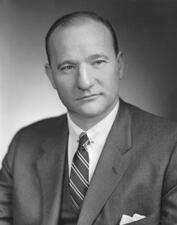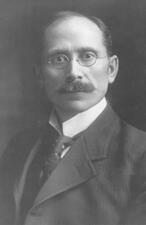
Joseph Little Bristow (July 22, 1861 – July 14, 1944) was a Republican politician from the state of Kansas who served as a United States Senator from 1909 to 1915. Elected in 1908, he held a single term in the Senate, during which he gained recognition for his support of several political causes associated with the Progressive Era. A member of the Republican Party, Bristow contributed to the legislative process during a significant period in American history, participating in the democratic process and representing the interests of his Kansas constituents at the national level.
Bristow was born on July 22, 1861, near Hazel Green in Wolfe County, Kentucky. He moved with his family to Kansas in his youth, part of the broader westward movement that was reshaping the Great Plains in the late nineteenth century. Growing up in a developing state that was still marked by the aftermath of the Civil War and the struggles over slavery and free soil, he was exposed early to the political and social issues that would later inform his public career. His formative years in Kansas helped root him in the agrarian and reform traditions that would characterize much of his later political outlook.
Educated in the public schools of Kansas, Bristow pursued further study at Baker University in Baldwin City, Kansas, a Methodist institution that served as an important regional center of higher learning. Although he did not complete a formal degree, his time at Baker University broadened his intellectual horizons and introduced him to the debates over morality, governance, and economic fairness that animated Midwestern politics in the late nineteenth century. His education, combined with his practical experience in a frontier state, prepared him for a career that would blend journalism, party organization, and public office.
Before entering the Senate, Bristow built a reputation in Kansas as a journalist and political operative. He worked as a newspaper editor and publisher, using the press as a platform to advocate Republican principles and reform causes. His skill in organization and communication led to positions within the Kansas Republican Party, and he became known as an effective party worker and strategist. Bristow also served in federal administrative roles, including work connected with the Post Office Department, where he was involved in investigating and addressing corruption, further enhancing his standing as a reform-minded Republican. These experiences, combining media influence, party leadership, and administrative reform, positioned him as a credible candidate for higher office at a time when Progressive Era concerns about efficiency, honesty, and public accountability were gaining strength.
Bristow was elected to the United States Senate from Kansas in 1908 and took office on March 4, 1909, serving until March 3, 1915. During his single term, he aligned himself with the progressive wing of the Republican Party, supporting measures aimed at political reform, greater transparency, and the curbing of corporate and special-interest influence in government. His Senate service coincided with a transformative period in American politics that included debates over tariff reform, direct election of senators, and regulatory oversight of business. As a Senator, he participated actively in these legislative struggles, contributing to the shaping of national policy during the administrations of William Howard Taft and Woodrow Wilson.
Bristow’s Senate career also placed him at the center of one of the most enduring anecdotes in American political folklore. During a Senate speech in which he was expounding on “what the country needs,” the presiding officer, Vice President Thomas R. Marshall, was reportedly moved to a stage whisper that became famous: “What this country really needs is a good five-cent cigar.” In one oft-repeated version of the exchange, Marshall interjected, “You overlooked the chief need of the country,” to which Bristow asked, “What’s that?” and Marshall replied, “The thing that seems to be needed most of all is a really good 5-cent cigar.” In early 1915, columnist Thomas F. Logan repeated the story with some altered details, reporting that Marshall, presiding during Bristow’s speech, turned to the Senate’s assistant secretary and remarked, “There’s some truth in what Bristow says, but he hasn’t yet hit the most important thing. What this country really needs is a good five-cent cigar.” Although Bristow played only a bit part in the episode, the anecdote has long been associated with his Senate tenure and illustrates the public perception of lengthy reform speeches during that era.
After leaving the Senate in 1915, following his single term in office, Bristow withdrew from national political life and turned to agriculture. He settled in Annandale, Virginia, where he lived in retirement as a farmer. This shift from high national office to a more private, agrarian existence reflected both his personal inclinations and the broader pattern of former public officials returning to the land or to private business after their service. He remained interested in public affairs but did not again hold federal office, instead devoting his later years to managing his farm and family life in Virginia.
Joseph Little Bristow died on July 14, 1944, in Fairfax County, Virginia, just days short of his eighty-third birthday. His life spanned from the Civil War era through the Second World War, and his career traced the arc of Midwestern Republican reform politics into the Progressive Era at the national level. Remembered as a Kansas Republican Senator who served from 1909 to 1915, a supporter of Progressive causes, and an inadvertent participant in one of the most quoted lines in American political humor, he also spent his final decades as a farmer in Annandale, Virginia, closing a public life rooted in both political reform and the rural traditions of the American heartland.
Congressional Record